2018 · THESIS PROJECT, LEAD DESIGNER
Bespoke
Democratizing Custom Eyewear
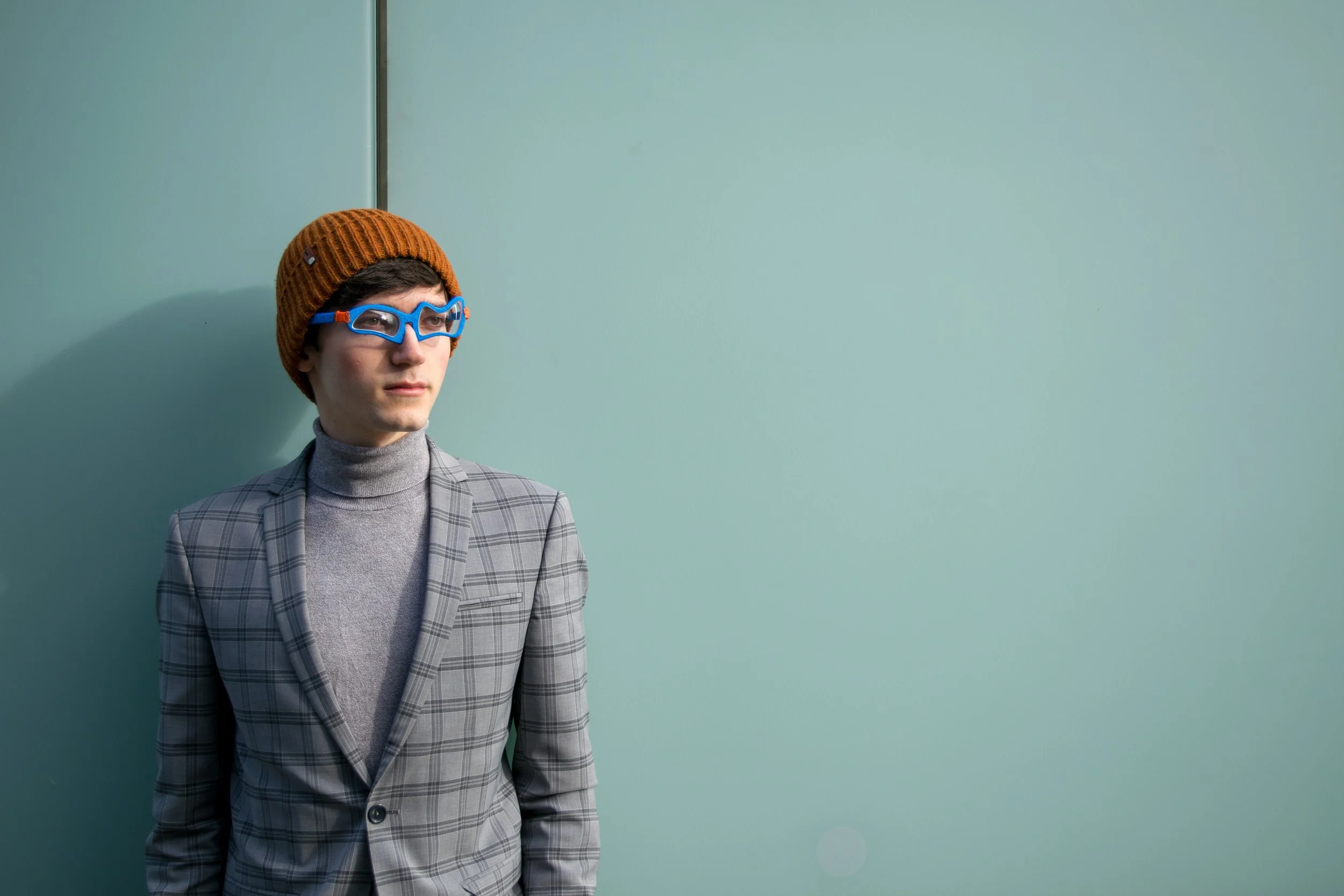
Quick Facts
Awarded Best Product Design Engineering Project by the Institution of Mechanical Engineers, 2018
Featured at Autodesk's Disruptive Innovation Festival, 2018
End-to-end system design from research through resolved concept
Designed and iterated printed hinges, fit geometry, and generative shape tools
Conducted user testing with physical prototypes throughout development
Tools: Fusion 360, Rhino, 3D printing, 3D scanning
Opportunity
Bespoke eyewear exists, but it's slow, local, and expensive - accessible only to those willing to accept all three constraints. The opportunity wasn't to replace that system, but to complement it.
Lenses are already cut to order. The existing supply chain had a natural seam where a new process could be introduced without friction. The question was whether 3D-printed frames - generated from a personal head scan and shaped to individual taste - could slot into that seam and make truly custom eyewear global, fast, and affordable.
Brief
From Scan to Wearable Geometry
Customer-Driven Frame Generation
Celebration of Manufacturing
From Scan to Wearable Geometry
The first question wasn't fit - it was fidelity. Scanned dimensions were compared against measurements taken with local opticians to establish whether the scanner could be trusted as the foundation of the process. Once accuracy was confirmed, the workflow for translating scan data directly into frame geometry was developed and validated.
Comfort was the primary measure of success. The contact areas - bridge of the nose and ears - received particular attention, as these are where fit failures are most immediate and where bespoke geometry has the most to offer over a standard frame.
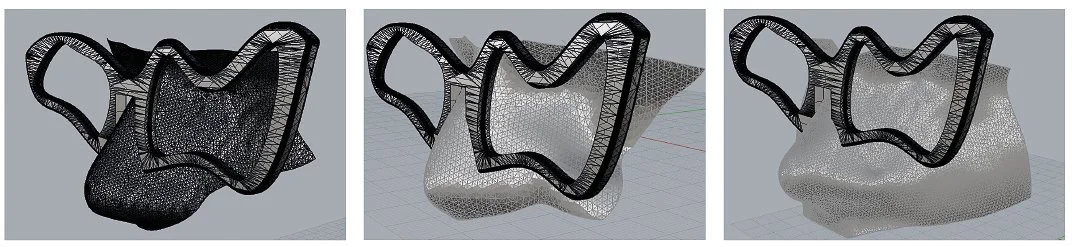
Every nose is different - contact zones were cut directly from scanned data for a perfect fit
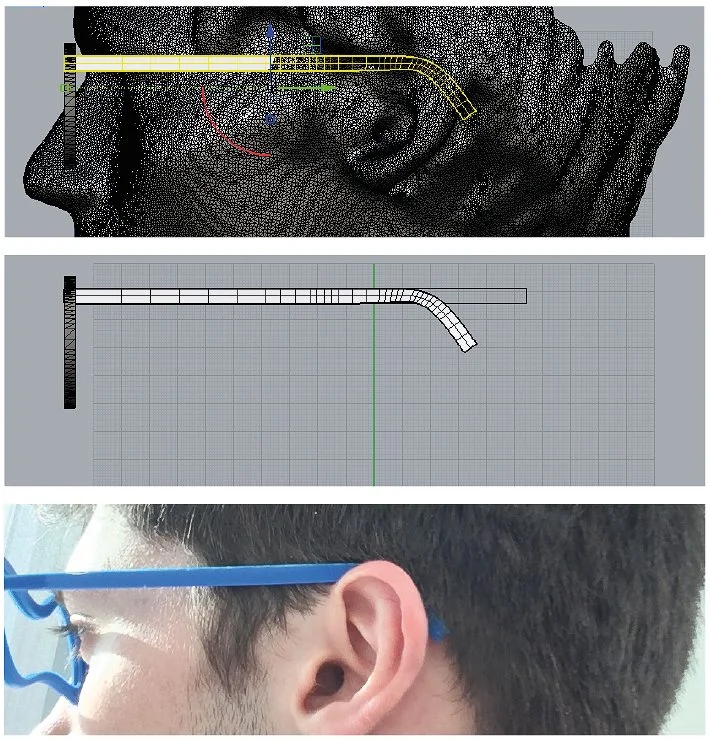
I found that natural asymmetry encouraged slight variation between each arm
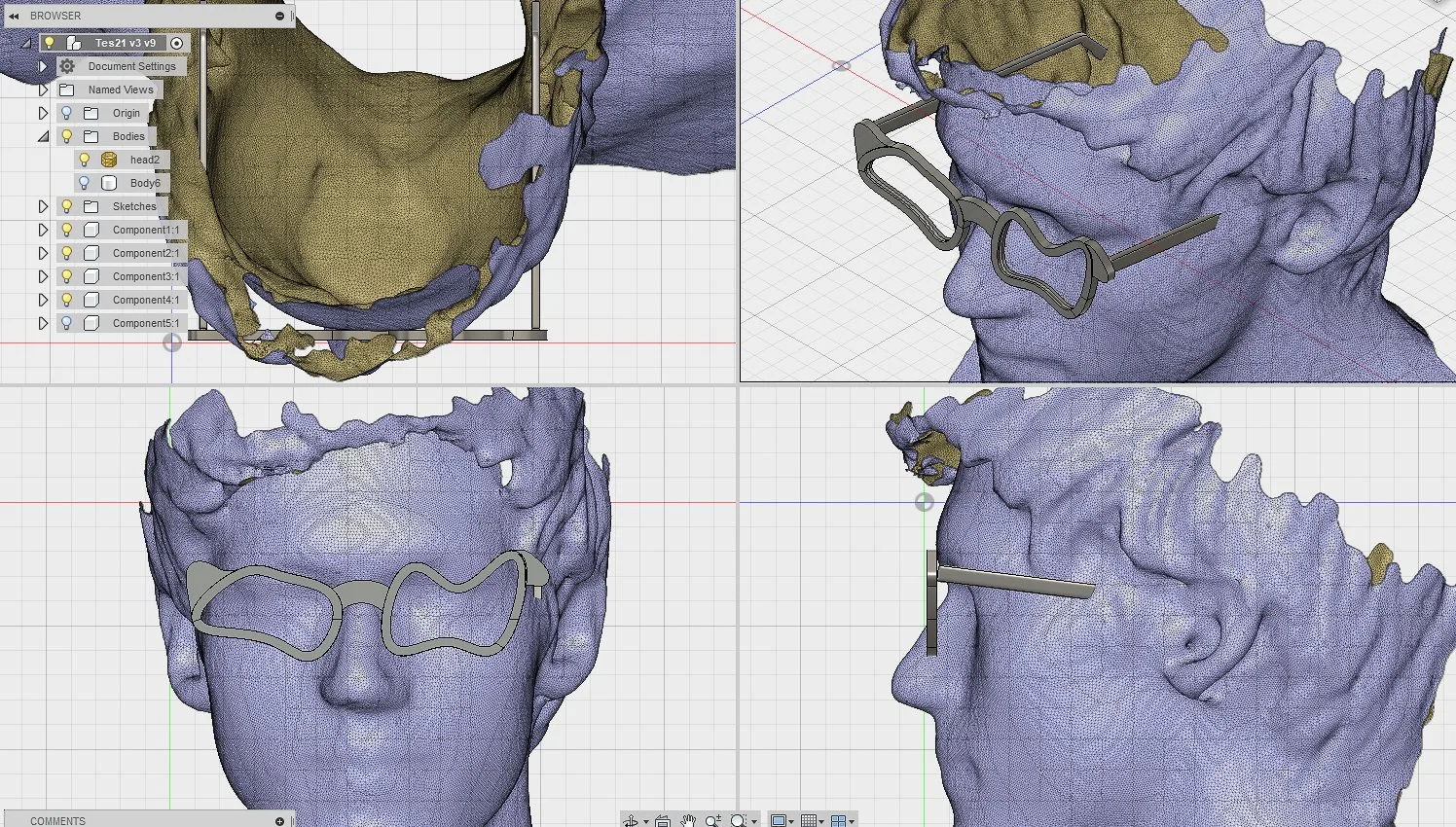
The final frame CAD being tested against scan data
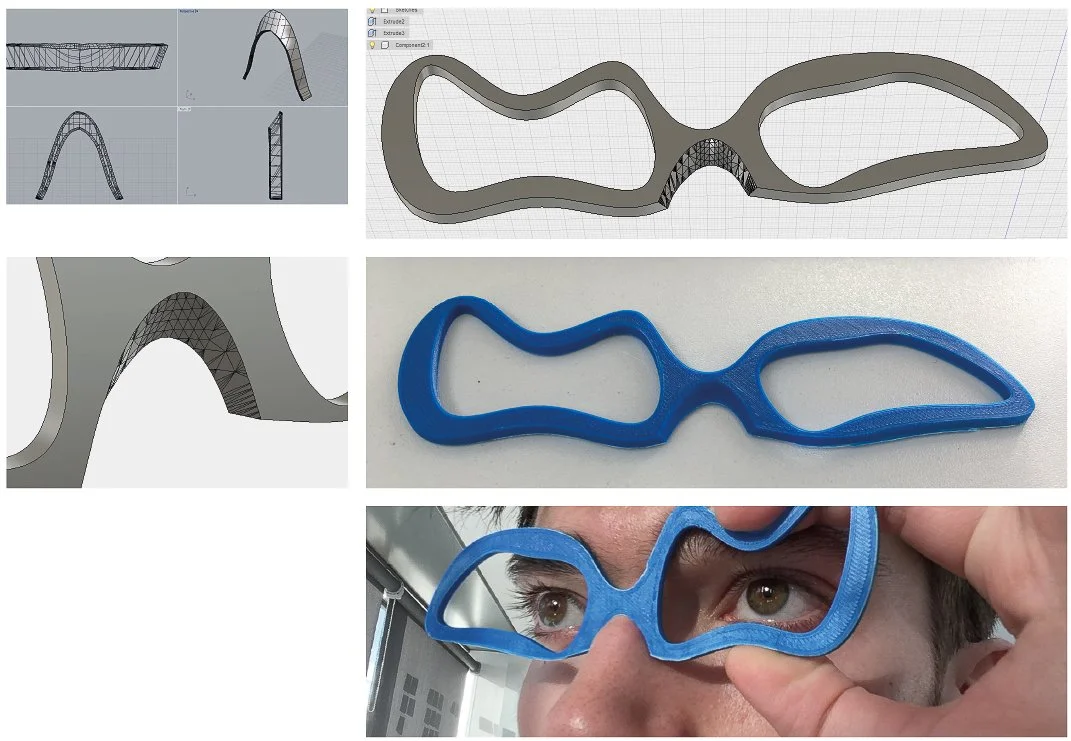
Frame data printed and tested for fit and comfort
Customer-Driven Frame Generation
Generative iteration put users inside the design process rather than downstream of it. Working with a classmate, we built a JavaScript tool that drew splines around reference images, letting users influence frame silhouette before the geometry was mapped to their scan and prepared for print. The intended system would present users with a range of generated options, progressively narrowing toward a final design based on their selections - a feedback loop between personal taste and manufacturable geometry.
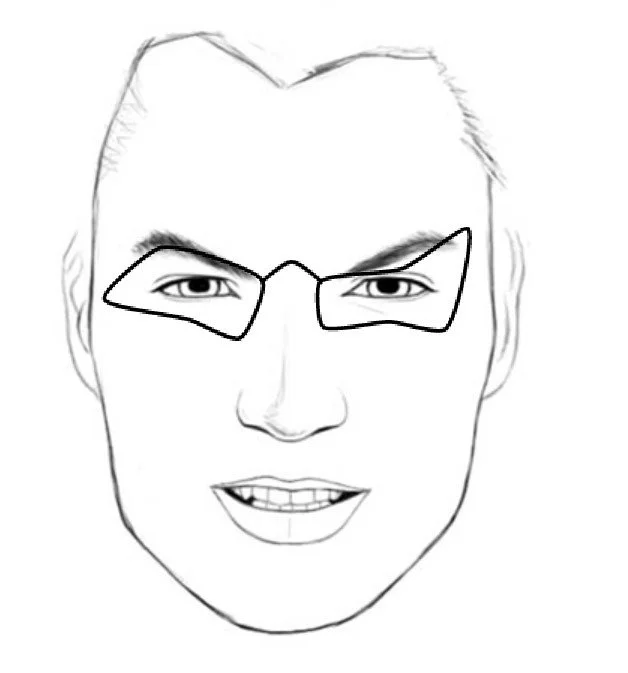
2D frame silhouette generated over a placeholder face reference
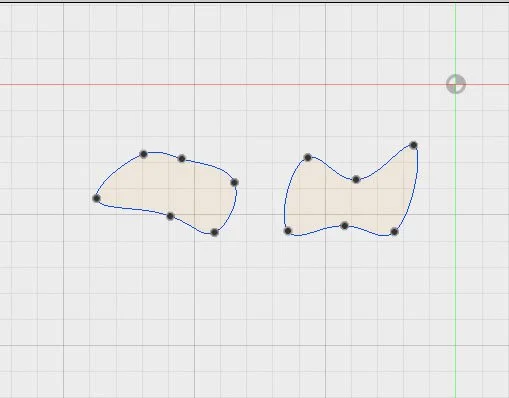
Silhouette imported as a spline into CAD
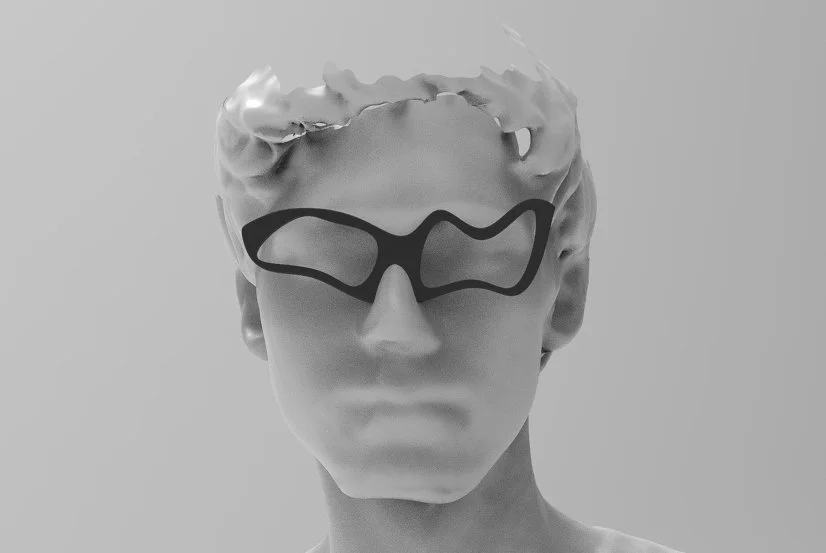
Frame geometry mapped to a scanned head
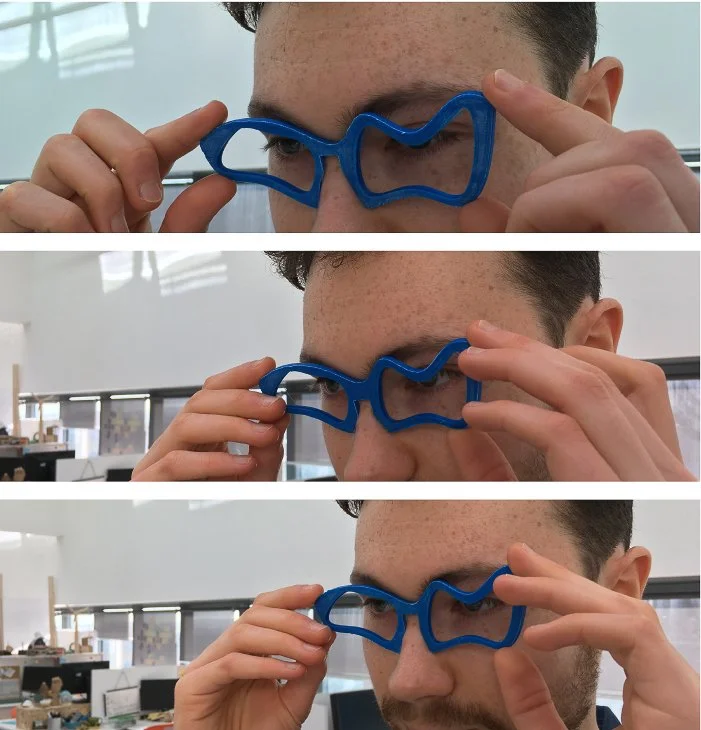
Three nose bridge variations in user comfort testing
Celebration of Manufacturing
A fully printed frame presented an opportunity to celebrate additive manufacture rather than disguise it. Two questions drove this: what does a hinge look like when it's designed for printing rather than adapted from metal hardware, and what does the right surface finish say about the process?
Printed hinge solutions were explored across multiple iterations, balancing flexibility and durability with the logic of the material. Surface finish was explored with equal seriousness - polishing and smoothing methods were tested, but a finish indistinguishable from injection molding undercut the story the object was trying to tell. The raw texture of the print, embraced rather than removed, became the more honest and distinctive answer.
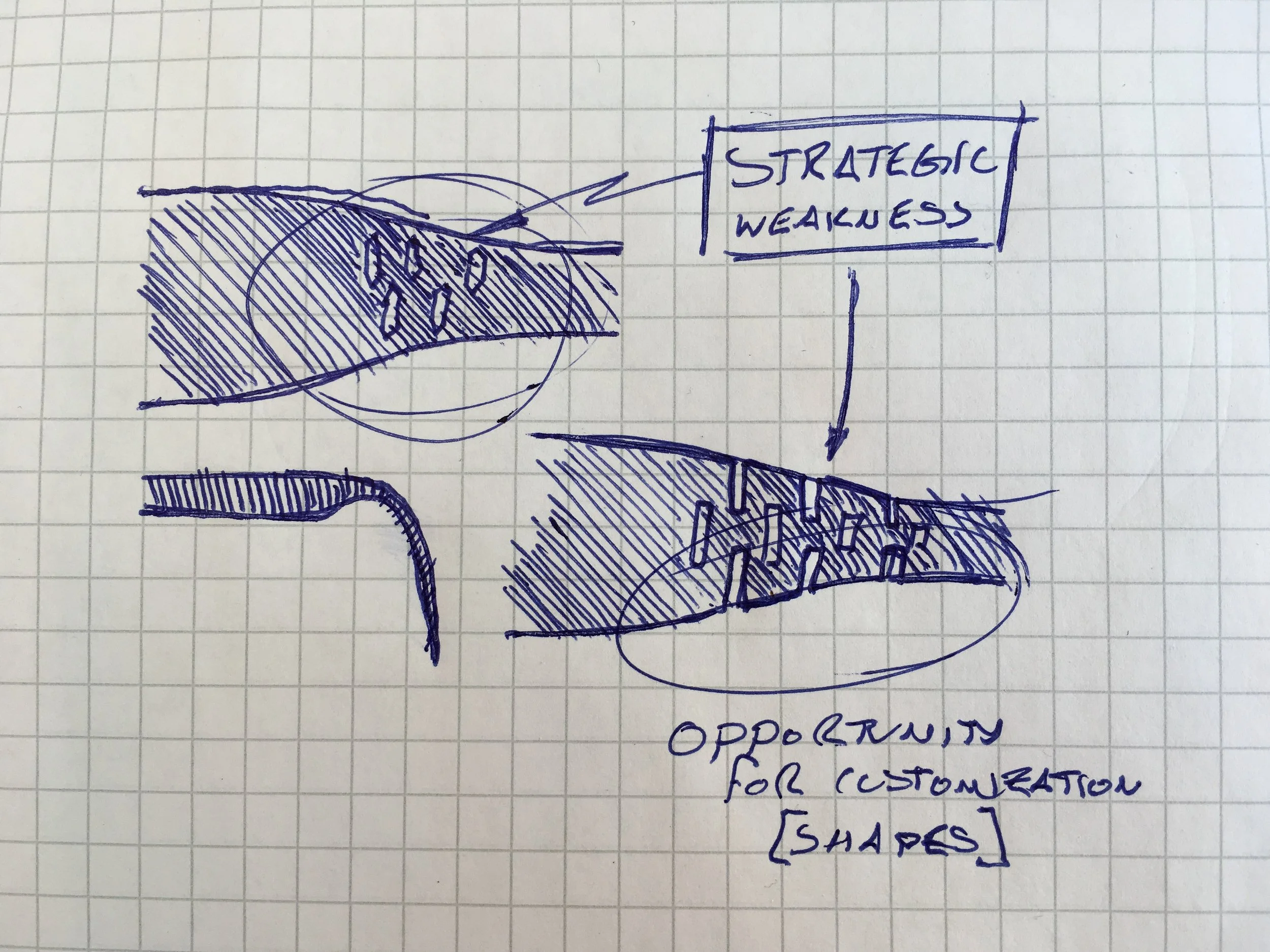
Early sketch exploration of a print-in-place flexible hinge
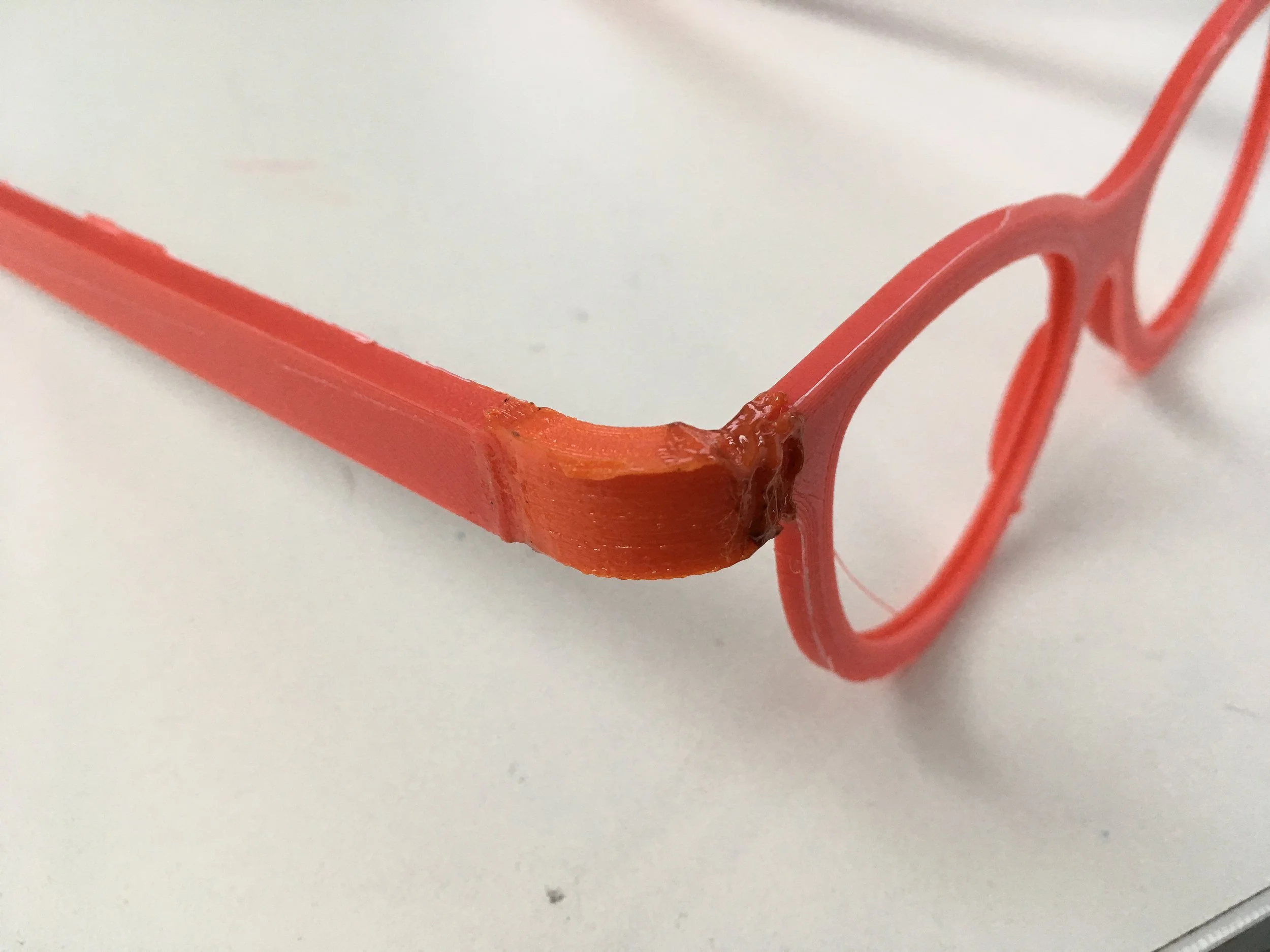
TPU flexible hinge prototype, heat-set into the frame
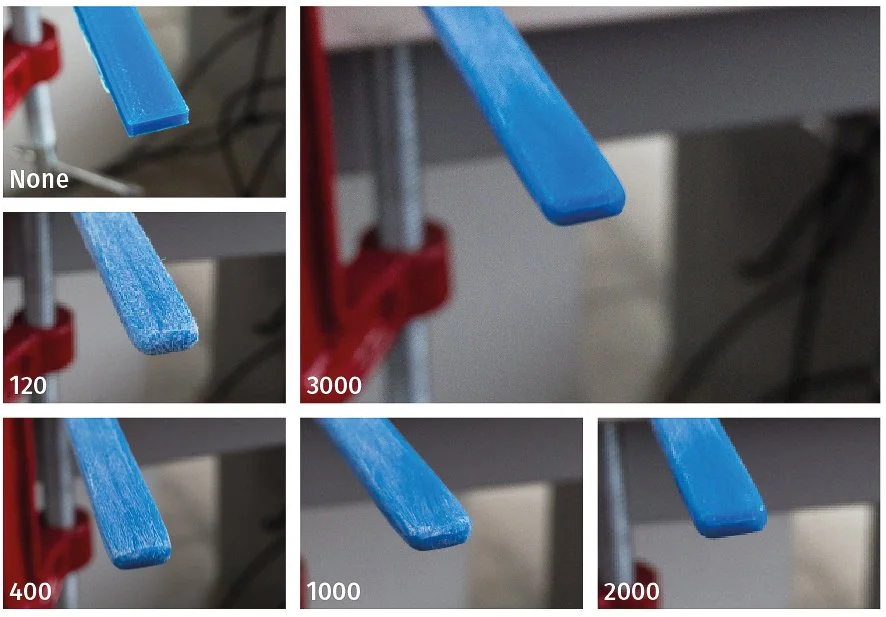
Surface finish results across sanding grits
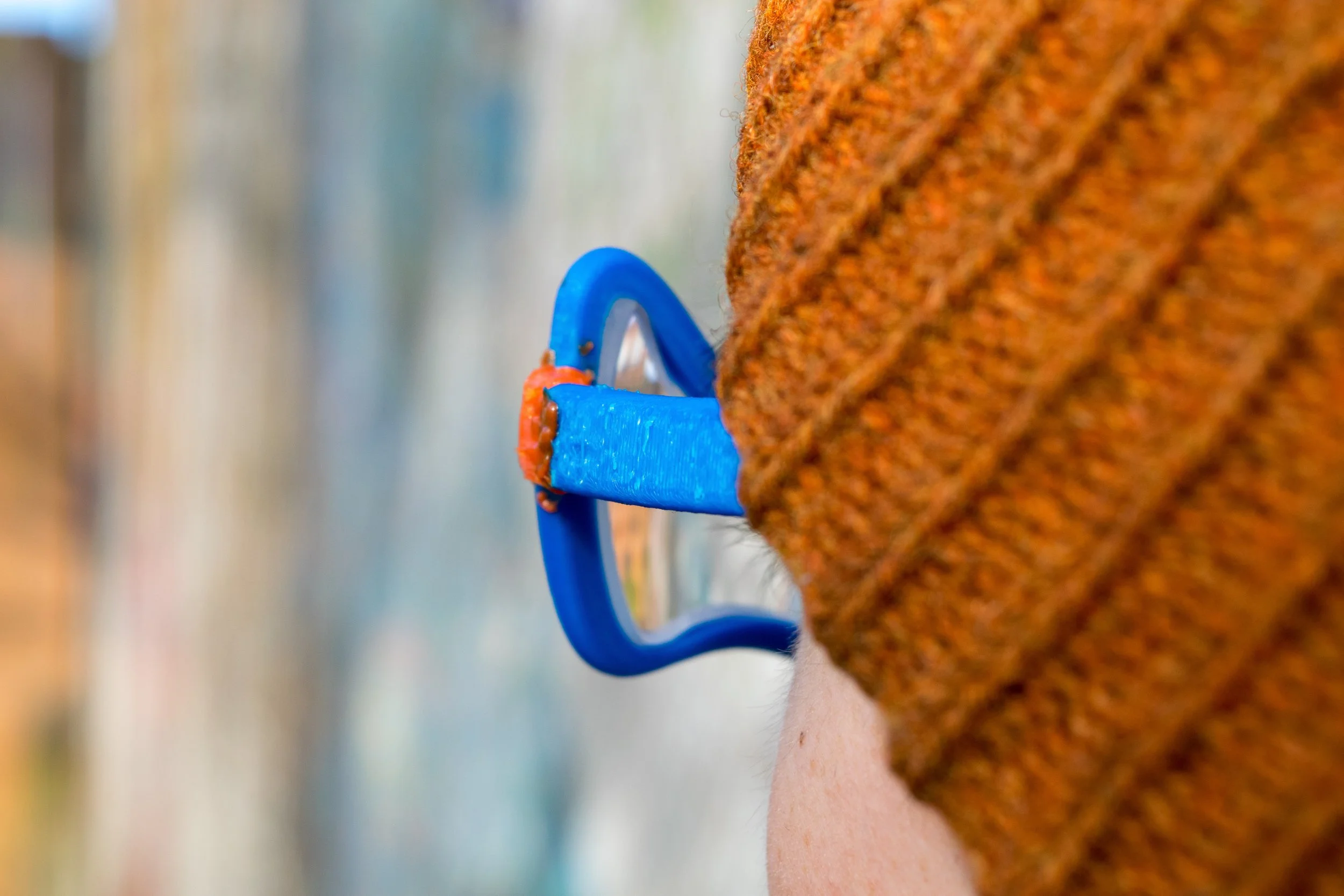
Raw FDM print texture as a finished surface
Outcome
Bespoke was awarded Best PDE Project by the Institution of Mechanical Engineers in 2018, and the work was discussed publicly by Autodesk's Steven Parkinson at that year's Disruptive Innovation Festival. It was never commercialized - but as a systems design exercise, it demonstrated that the barriers to custom eyewear at scale were already lower than they appeared.