2026 · FOUNDER, LEAD DESIGNER
Plinth Press Base
The Ultimate Basket Press Base
Quick Facts
Founded Blushworks in 2024 - identified market gap, defined brand, built operations from scratch
End-to-end product development from brief through manufacture and delivery
Designed steel, powder-coated components and custom hardware assembly
Sourced manufacturers and logistics partners
Built and managed D2C sales, distribution, and warehousing
Spokesperson at trade shows across the US
Patent-pending on core press stand design

Opportunity
Basket presses need to be elevated to press juice directly into a collection bucket - but no purpose-built stand exists for home winemaking scale. The workaround is always improvised: a folding table, a tree stump, a cardboard box to get the height right. Unstable, immobile, and one slip away from losing a whole batch.
Plinth was designed to replace the improvisation entirely - a purpose-built base with the right height, the right stability, and the ability to move when needed. Home winemaking is a serious craft, and the equipment surrounding it should reflect that. Plinth rejects the "good enough" aesthetic of typical hobby tools.
Brief
Built to Last
Elevated Aesthetic
Built to Last
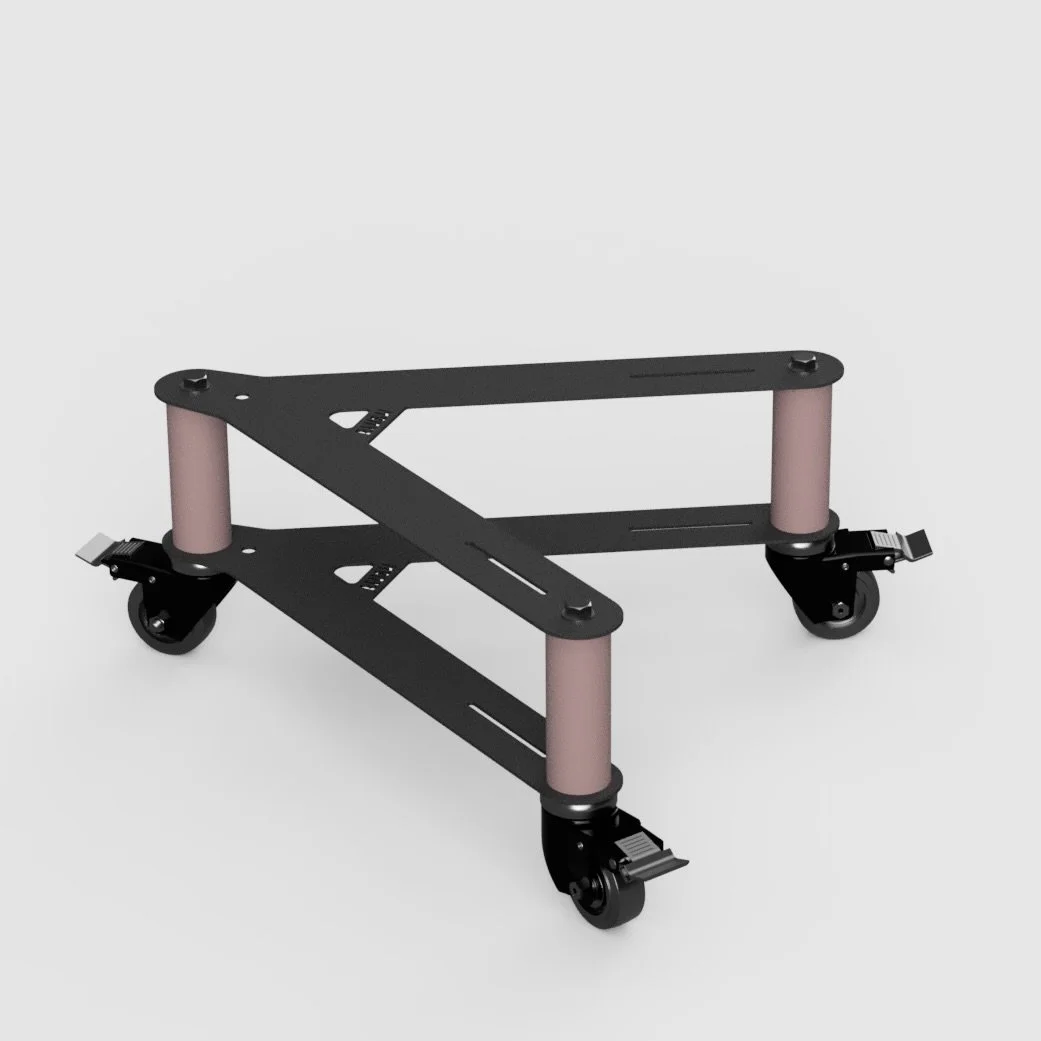
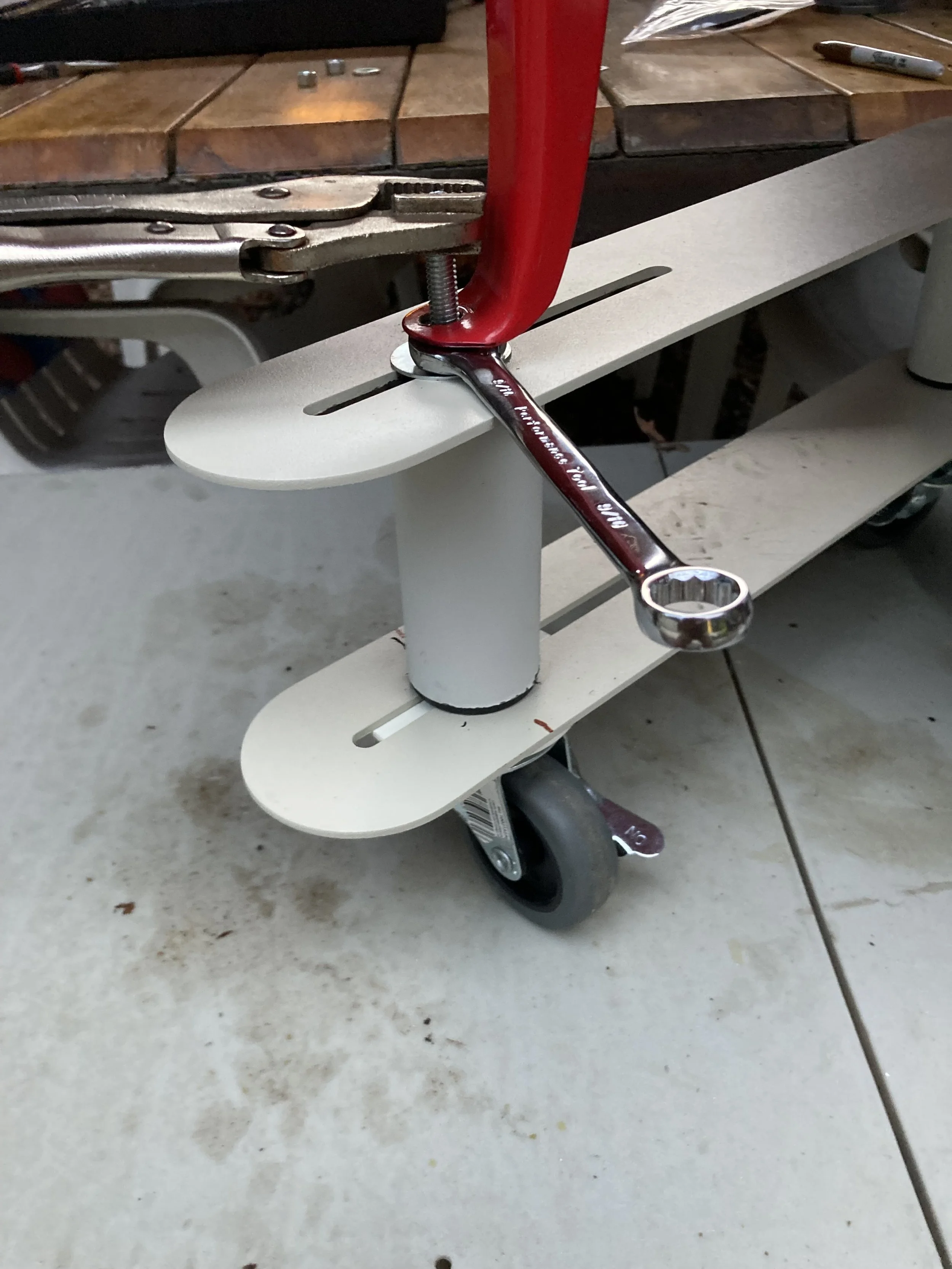
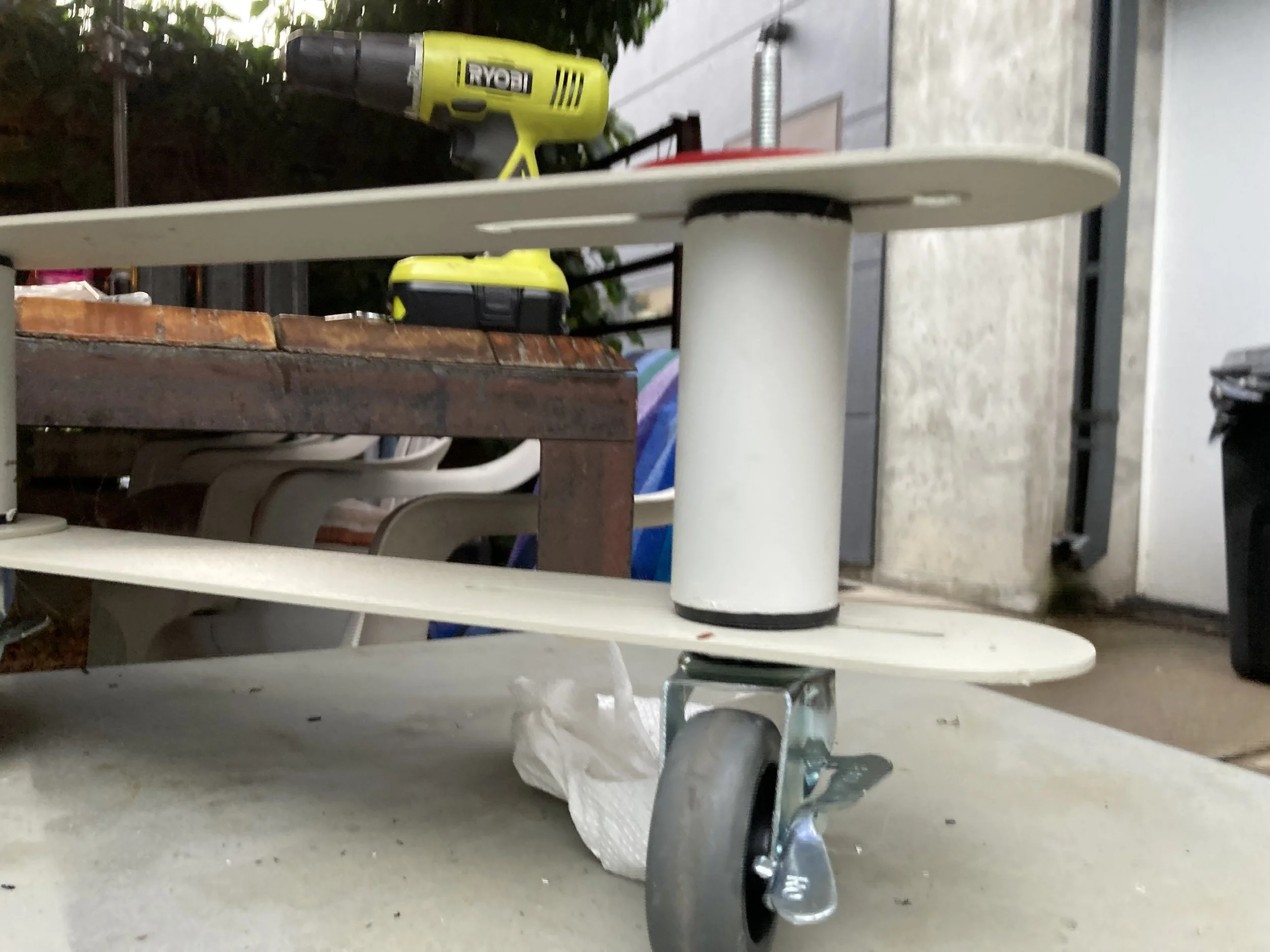
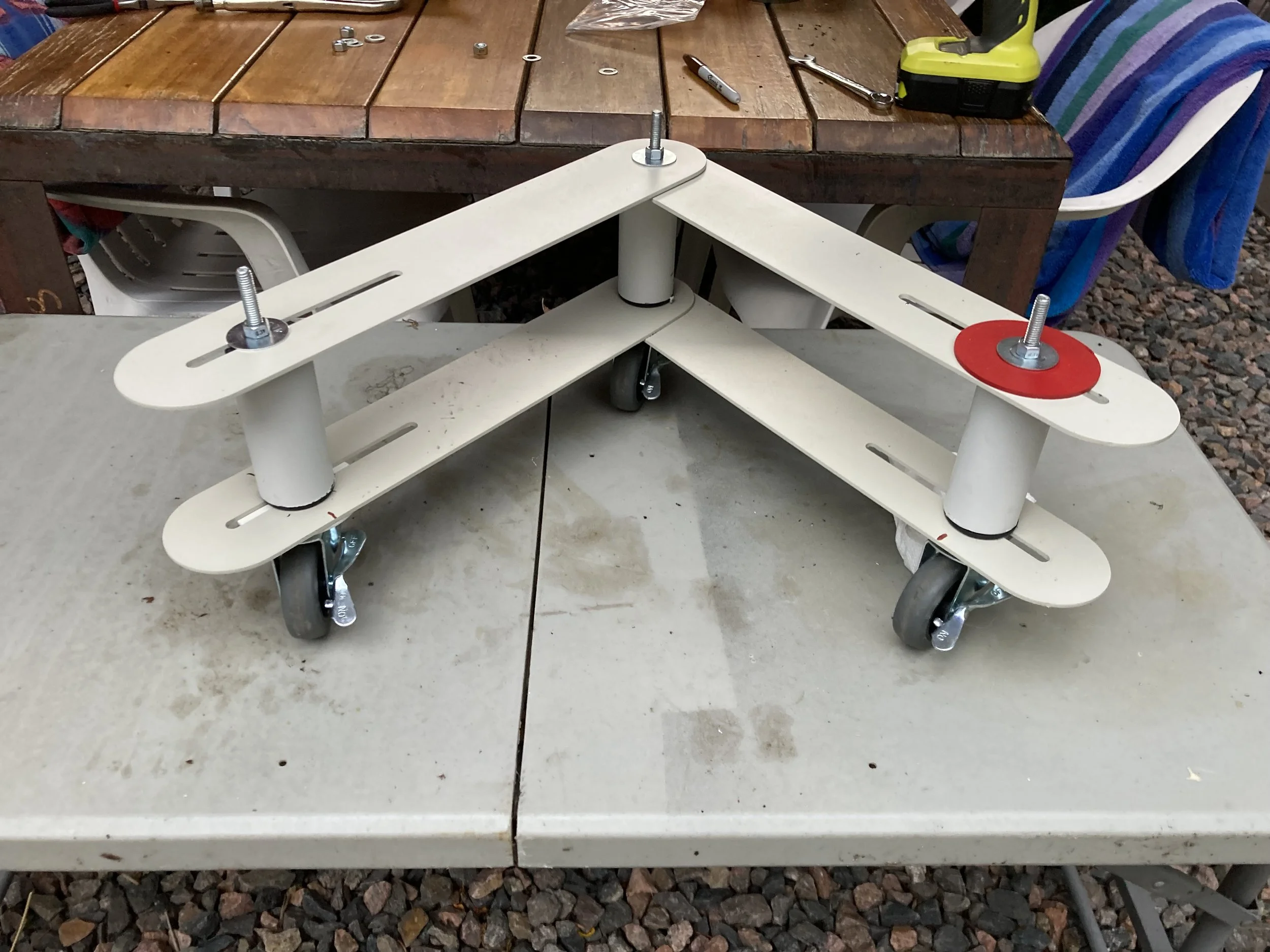
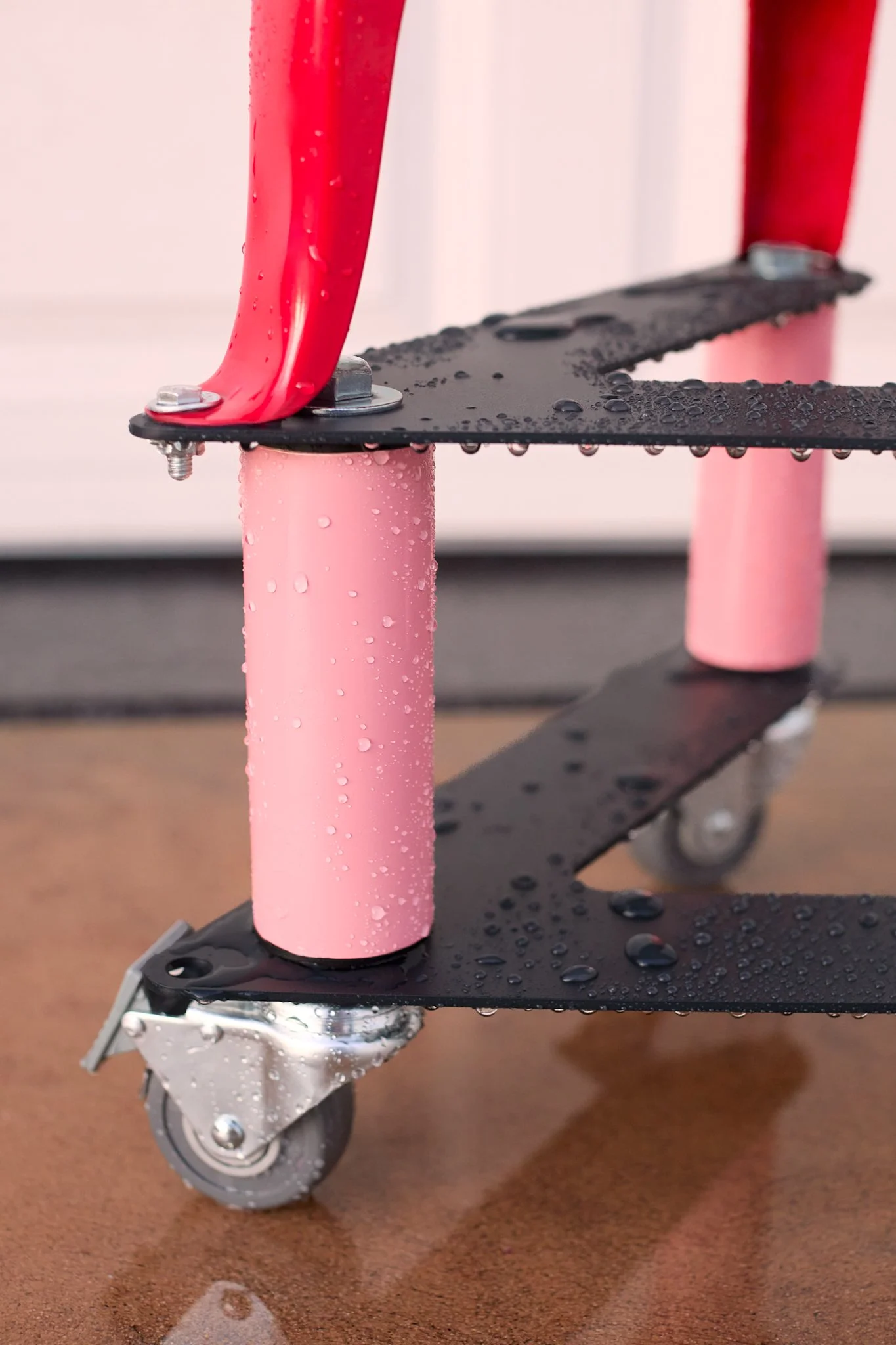
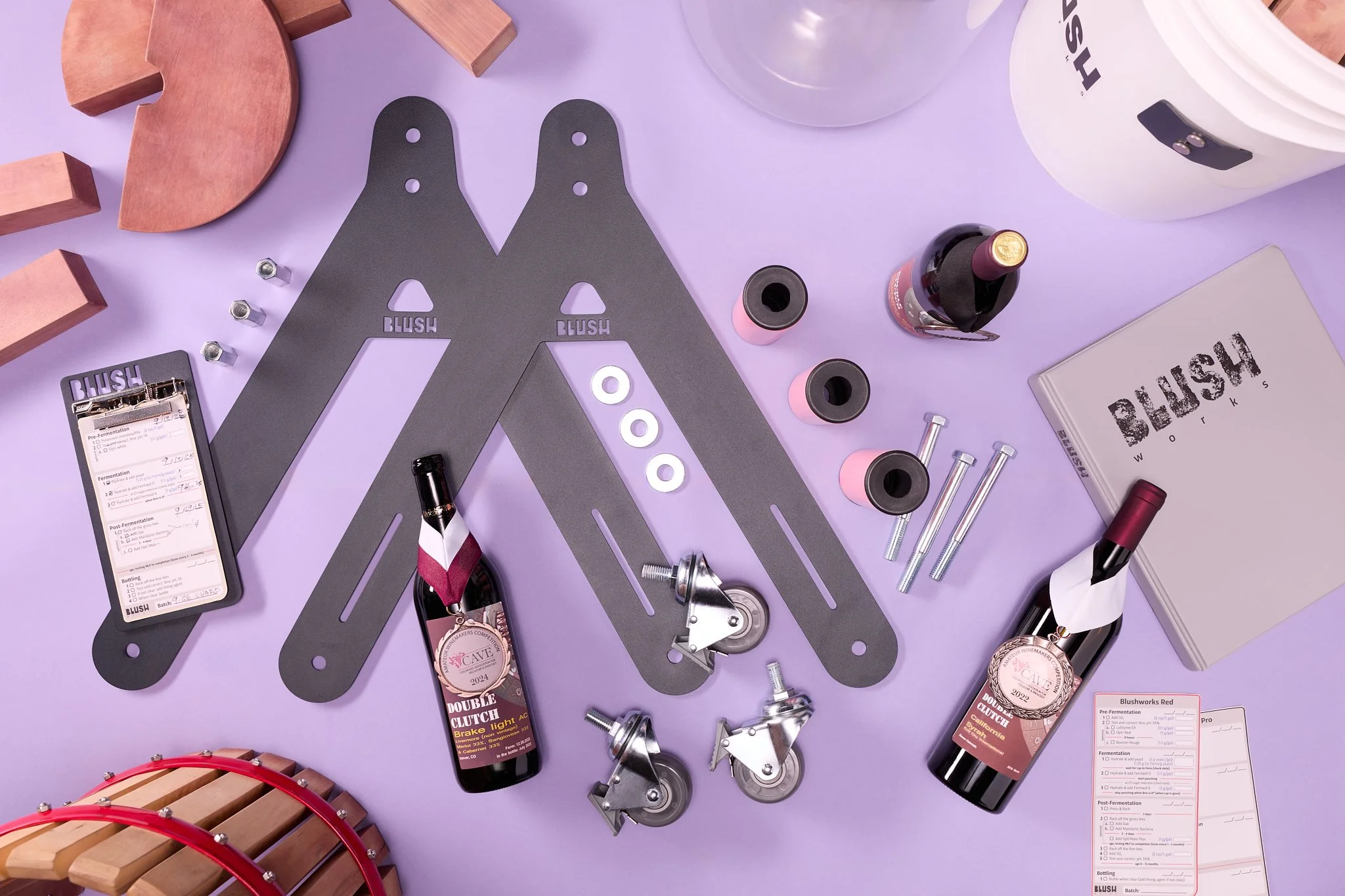
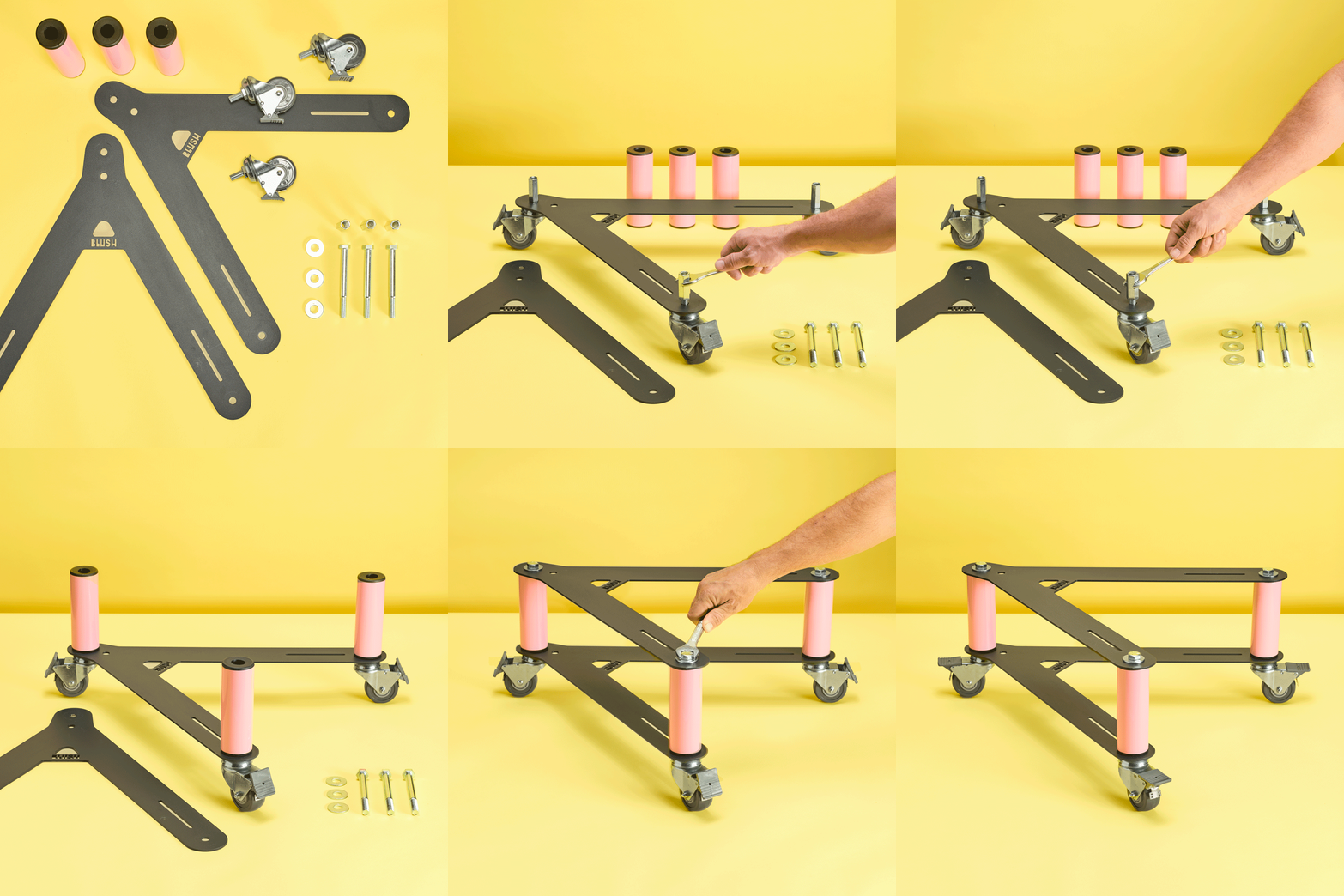
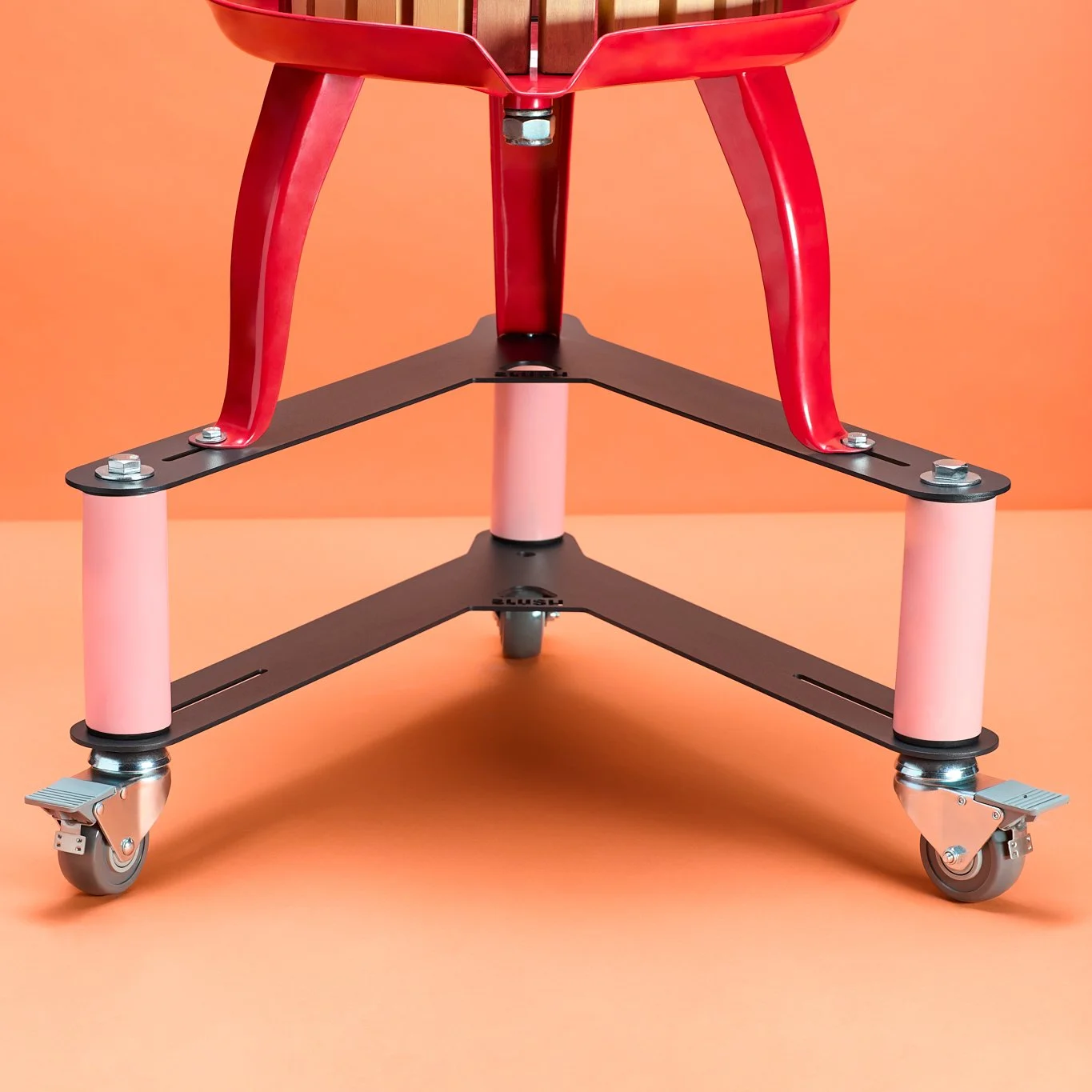
The structural solution came from an unexpected reference: the push puppet toy, where tension through a central string holds a figure upright and distributes load through its joints. Plinth uses the same principle - a long bolt runs through each pink tube, sandwiching it between two steel plates and creating a rigid, tension-based assembly. The result is a structure that handles hundreds of pounds without flex, and can be fully disassembled, cleaned, and repaired without specialist tools.
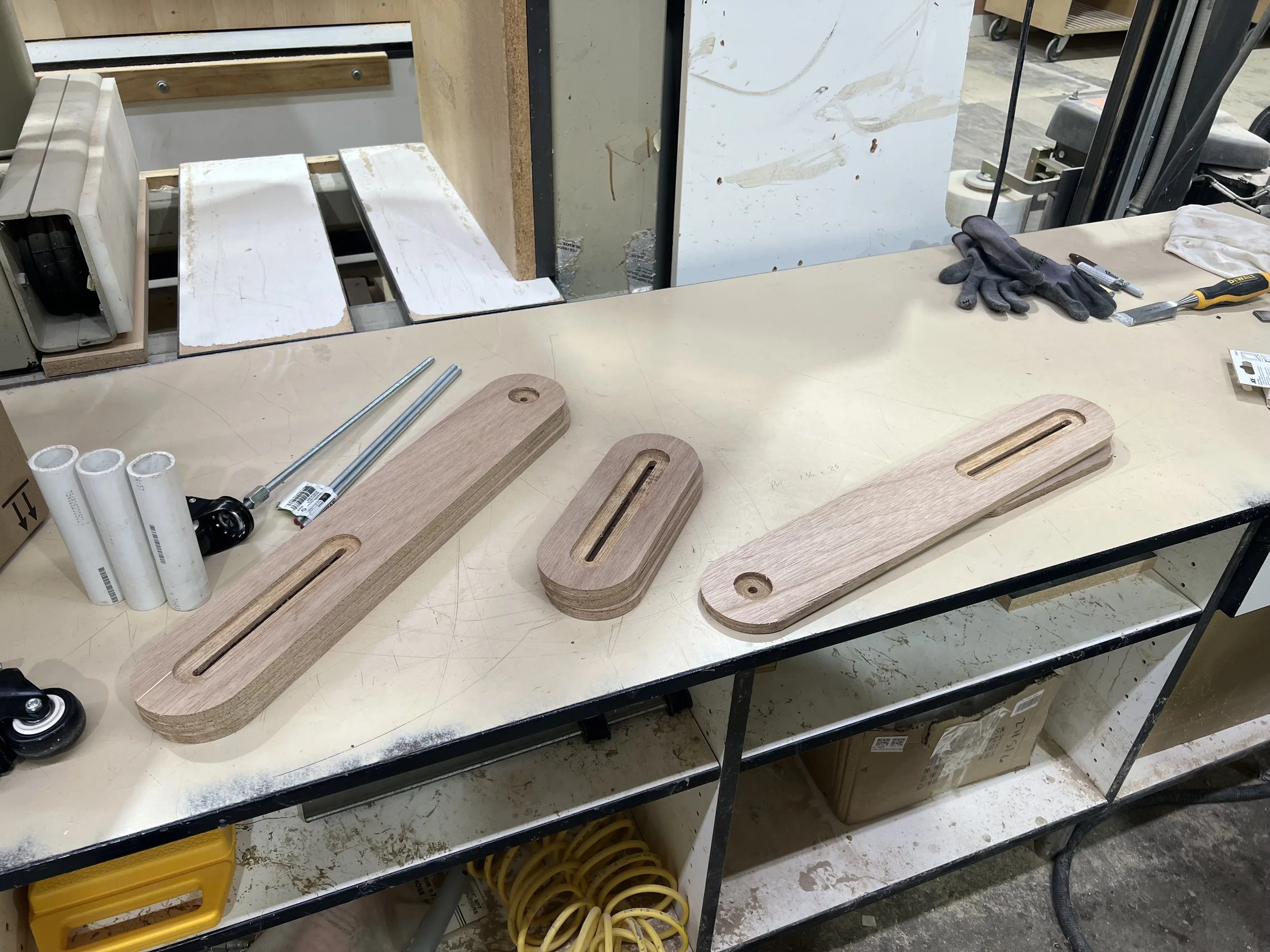
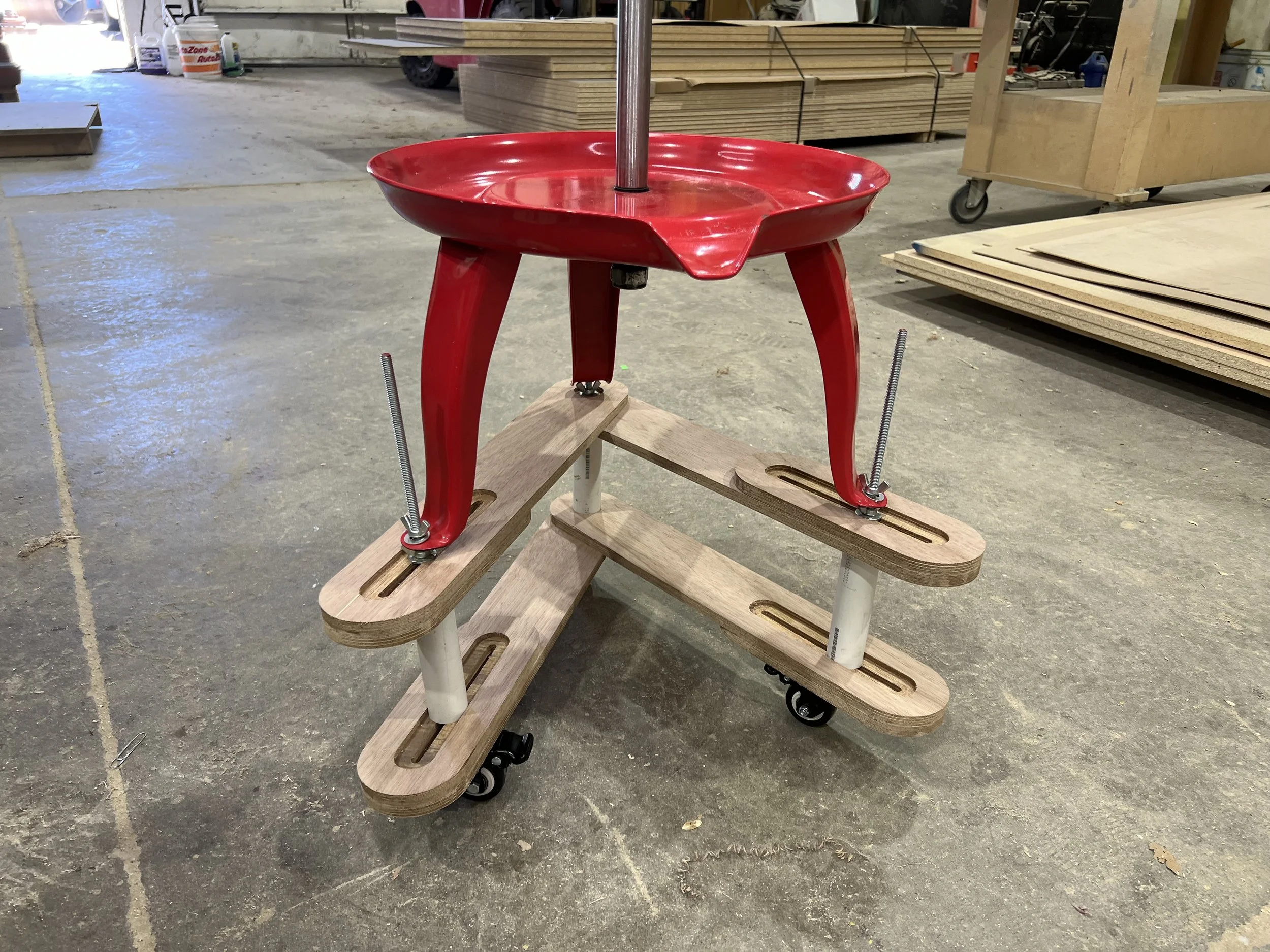
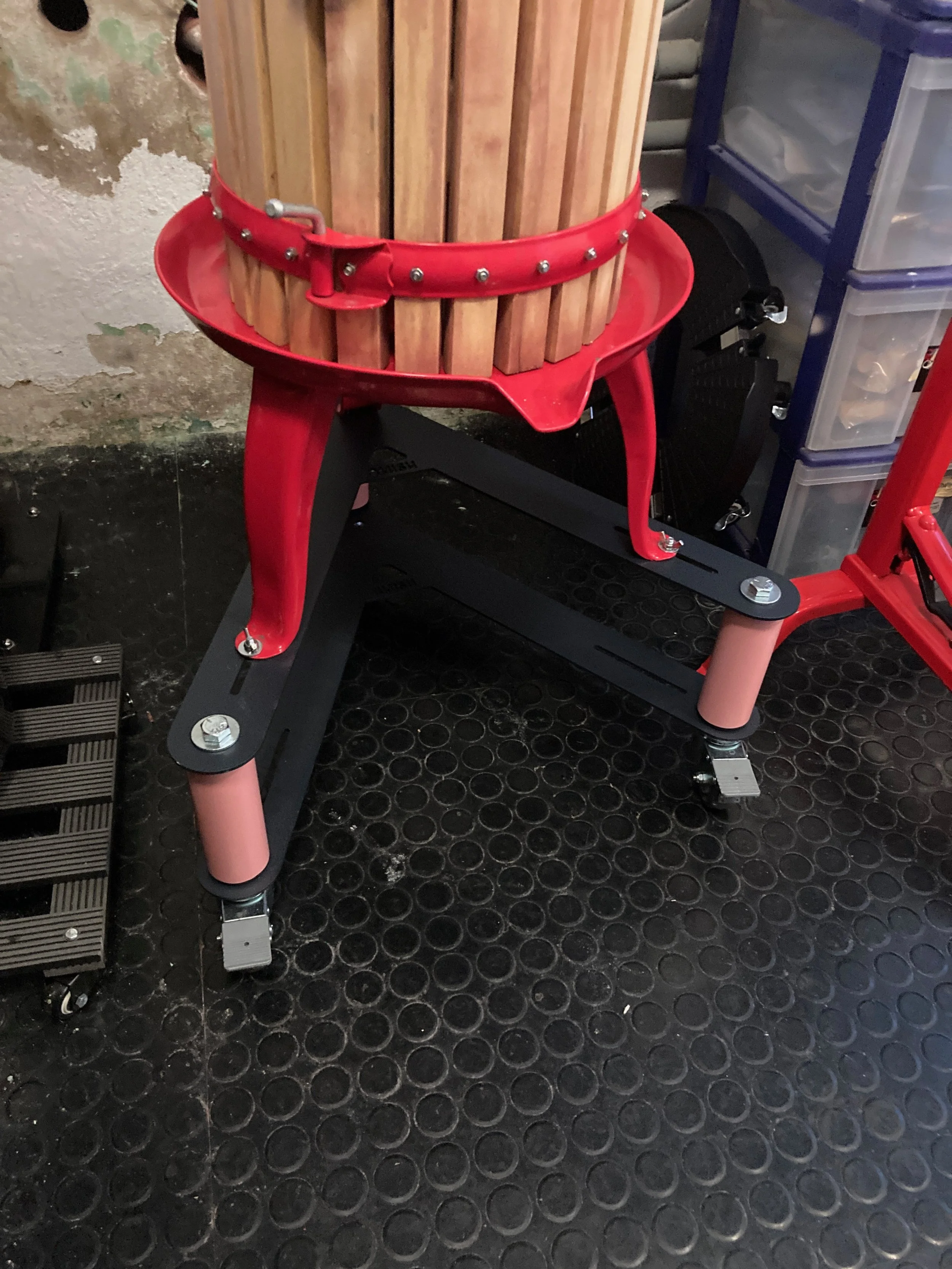
Most basket presses are tripods, so rather than designing for a single press size, a slot mounting system accommodates a range of tripod footprints within a standard size envelope. Every component was evaluated against both repairability and cost - with this much heavy steel, neither could be an afterthought.
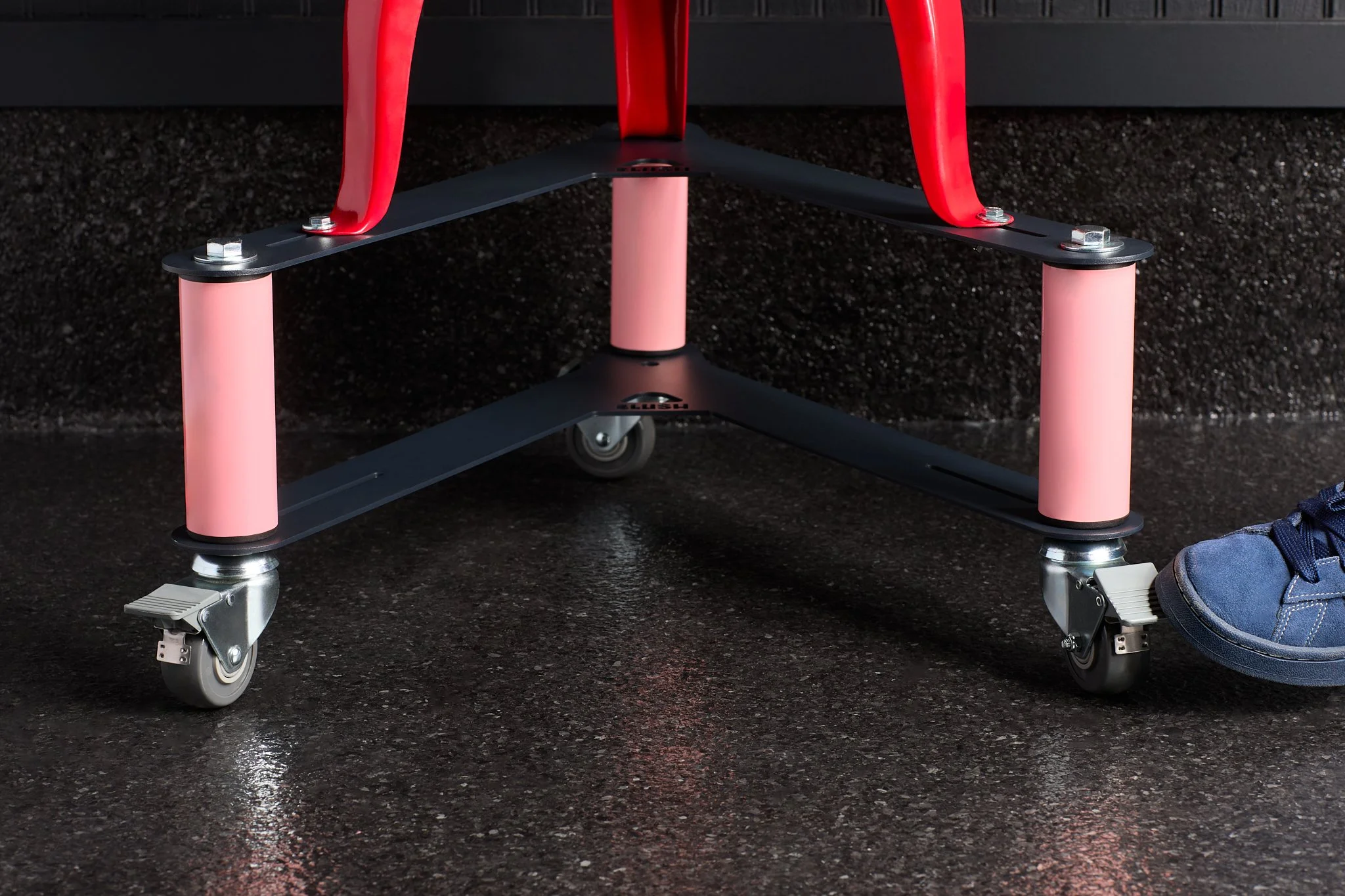
The caster selection was driven by a specific insight: locking only the wheel isn't enough when all four casters swivel. A swivelling caster under load can still shift even with the wheel locked. Each caster locks both wheel and swivel simultaneously with a single toe press - essential for stability in the tight basements and garages.
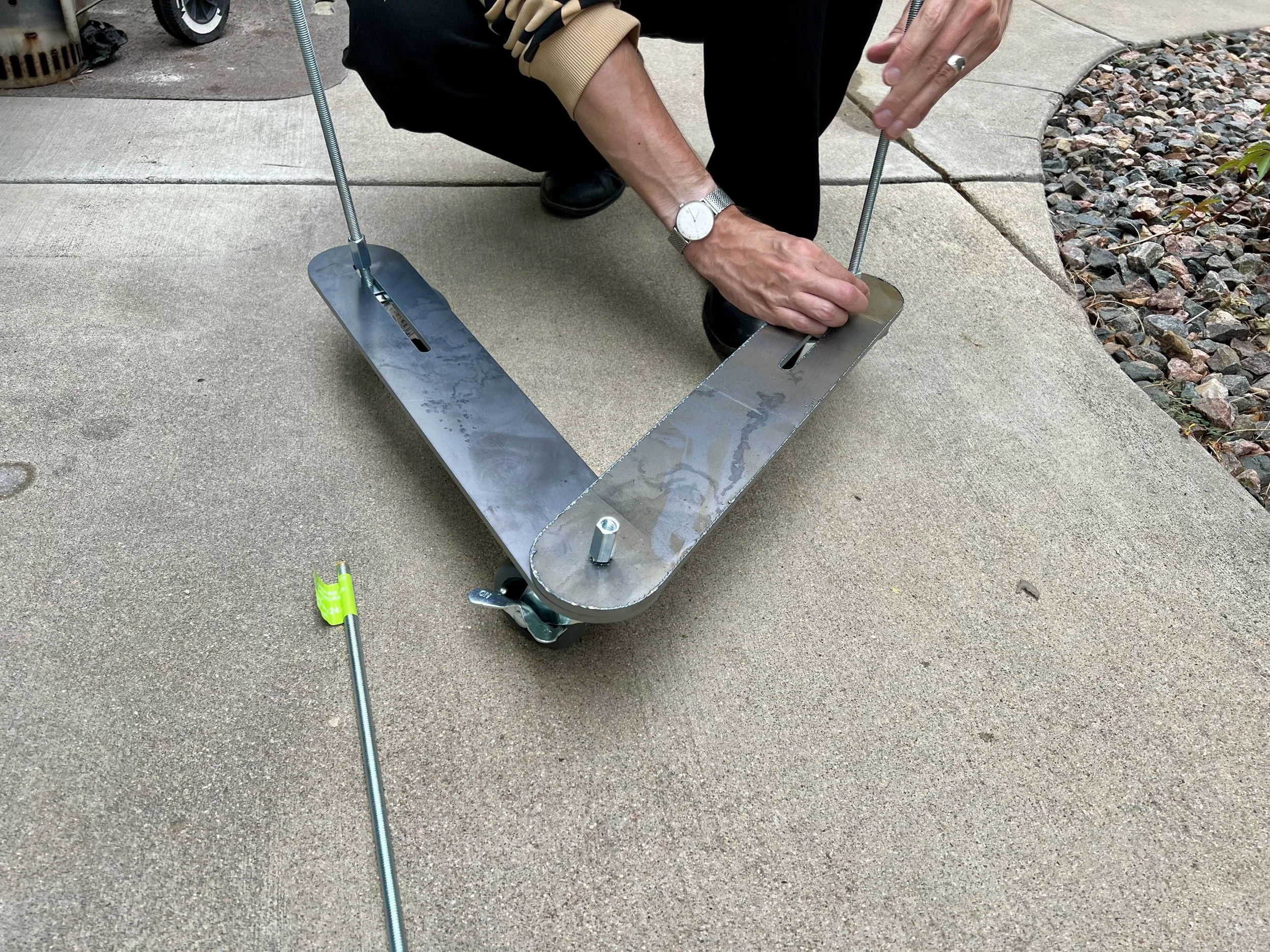
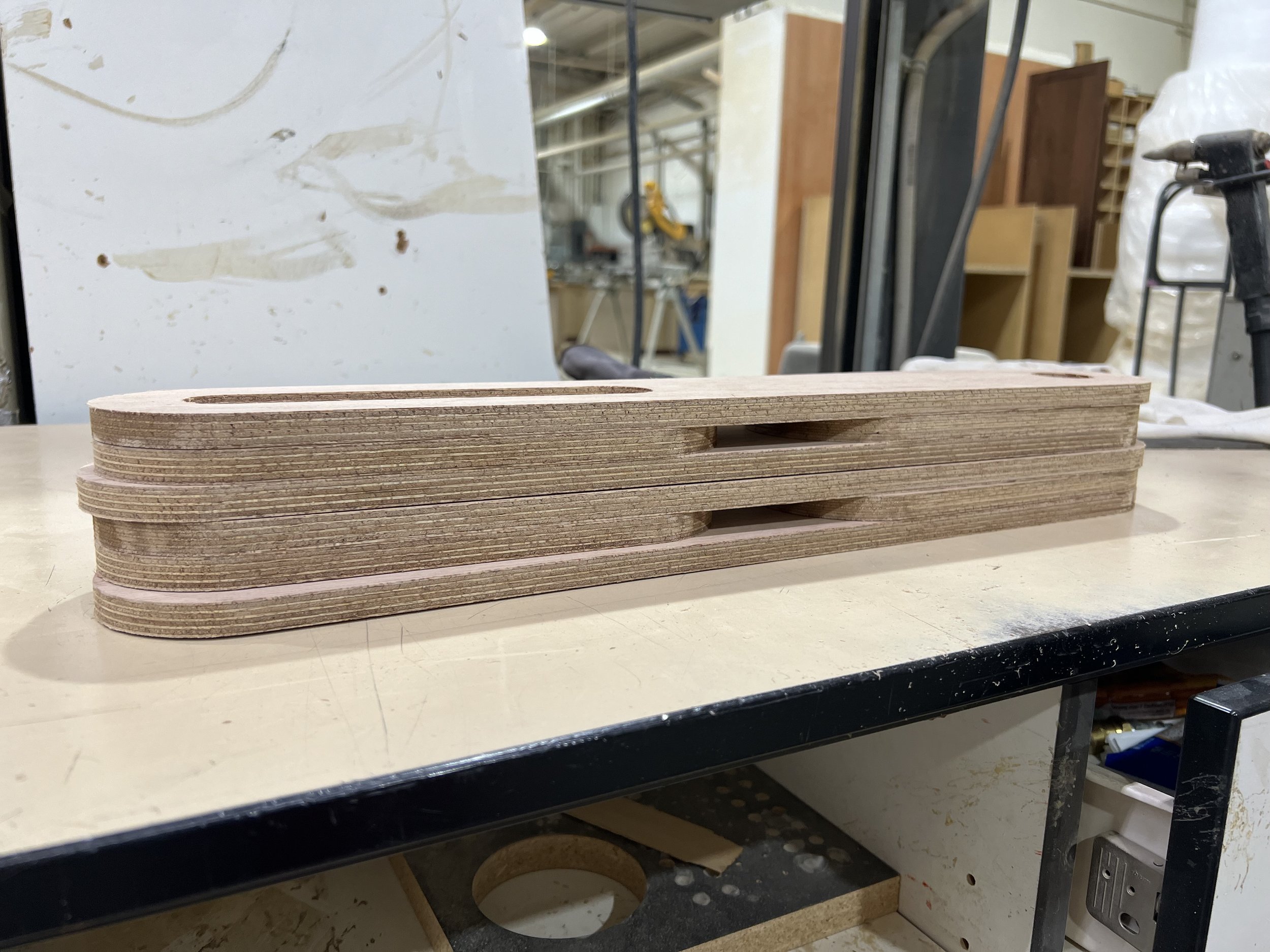
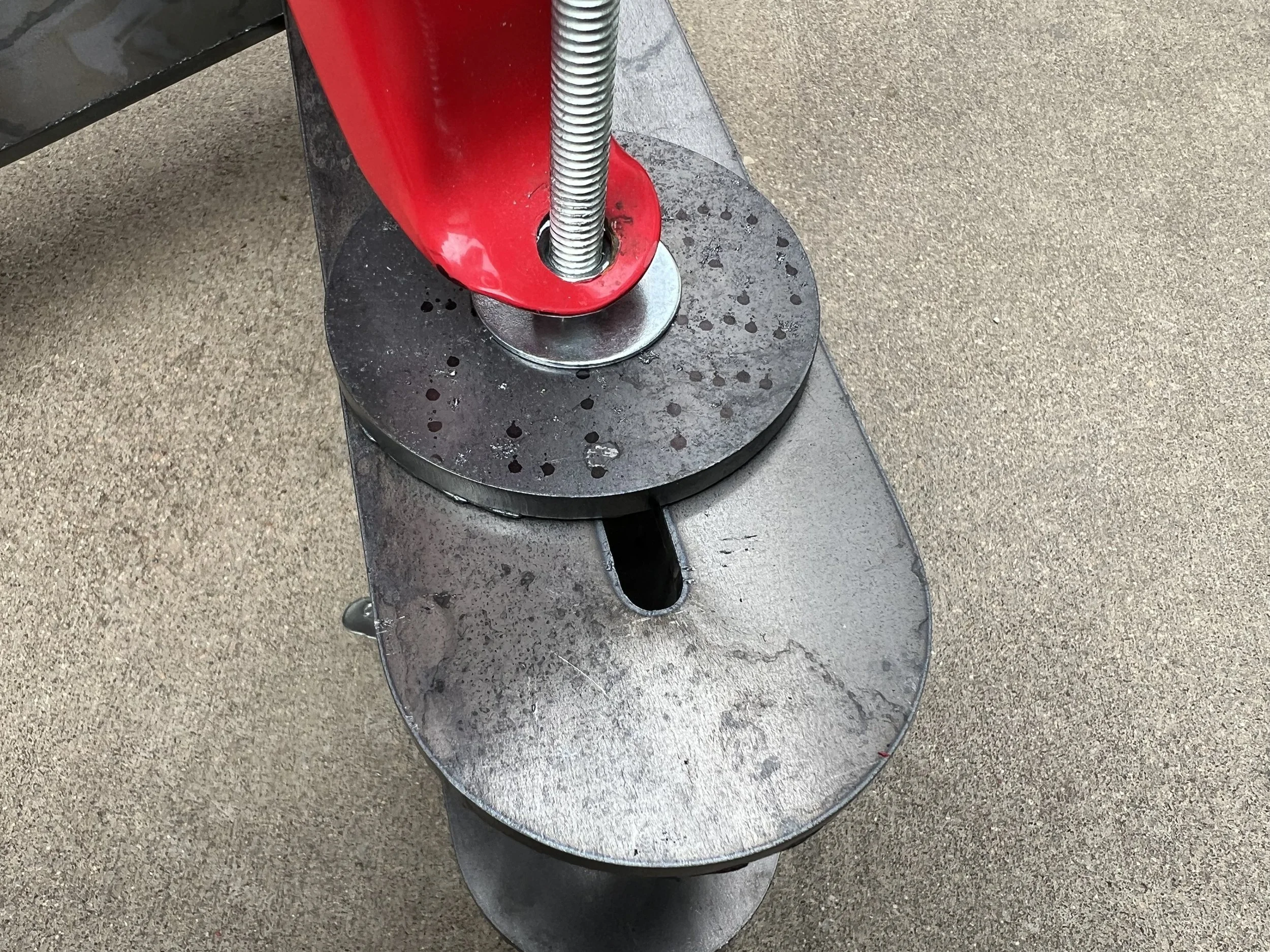
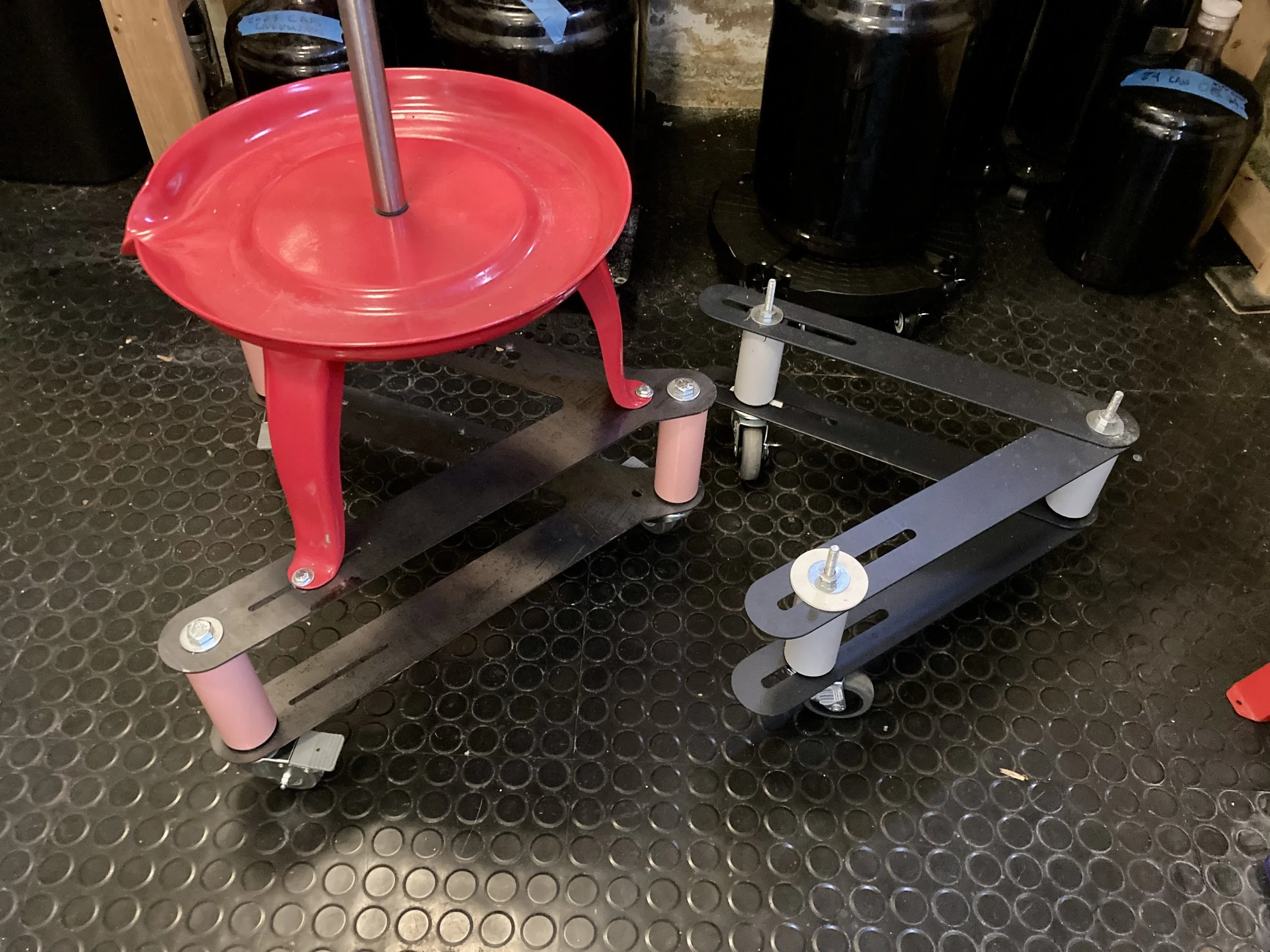
Early steel prototype - bolt-through-tube tension assembly and slot mounting system visible
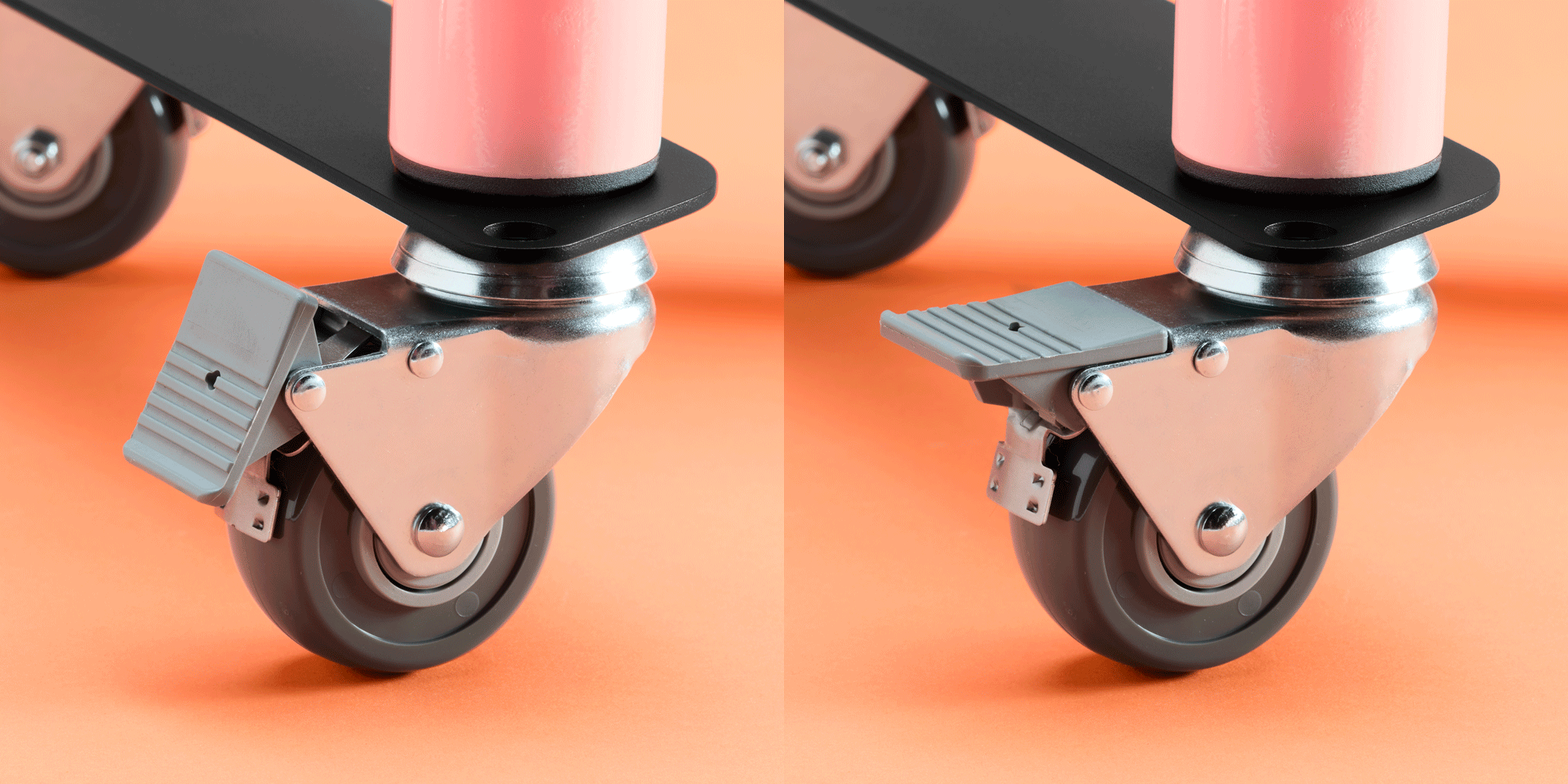
Single toe-press locks both wheel and swivel simultaneously
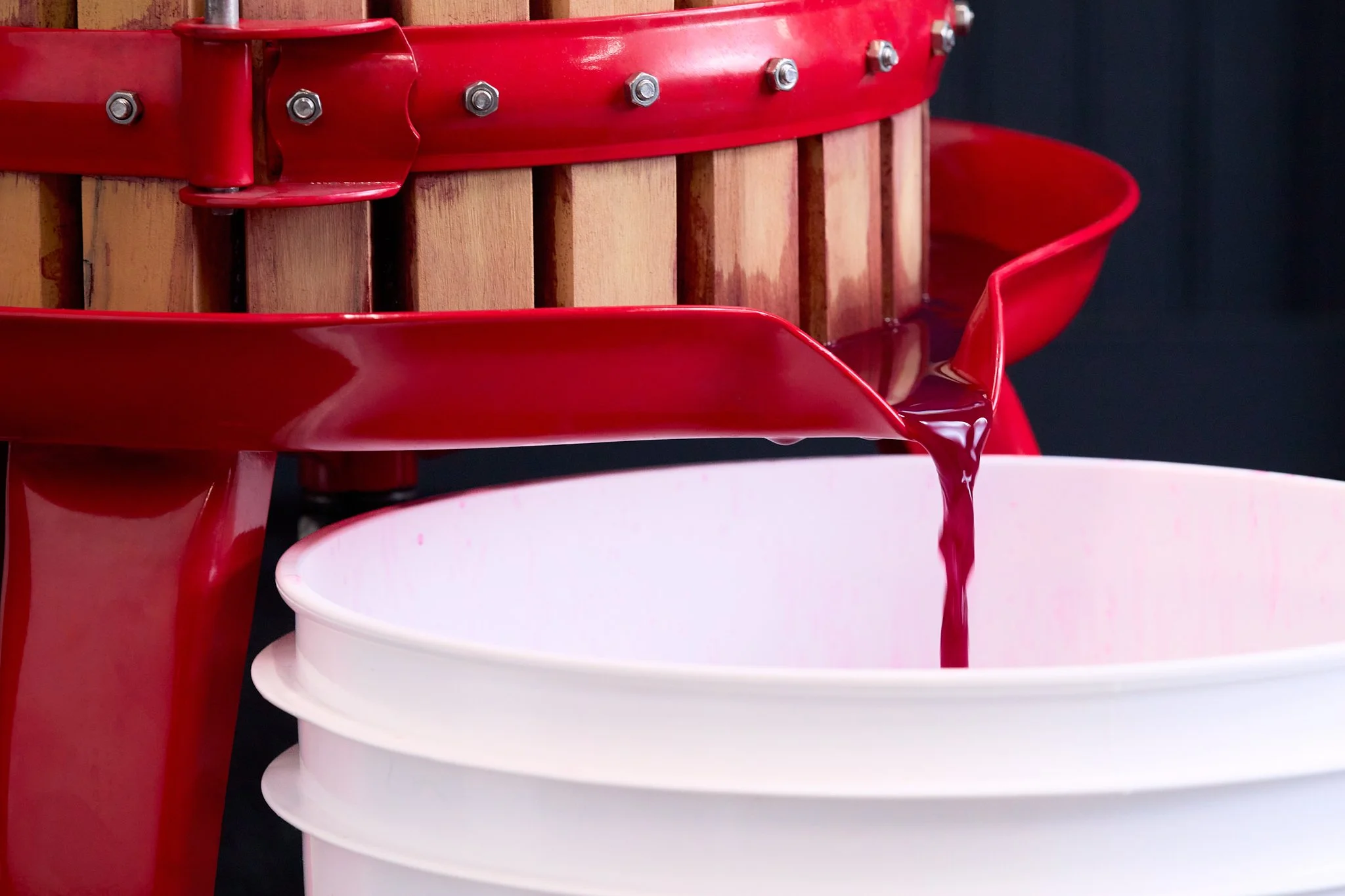
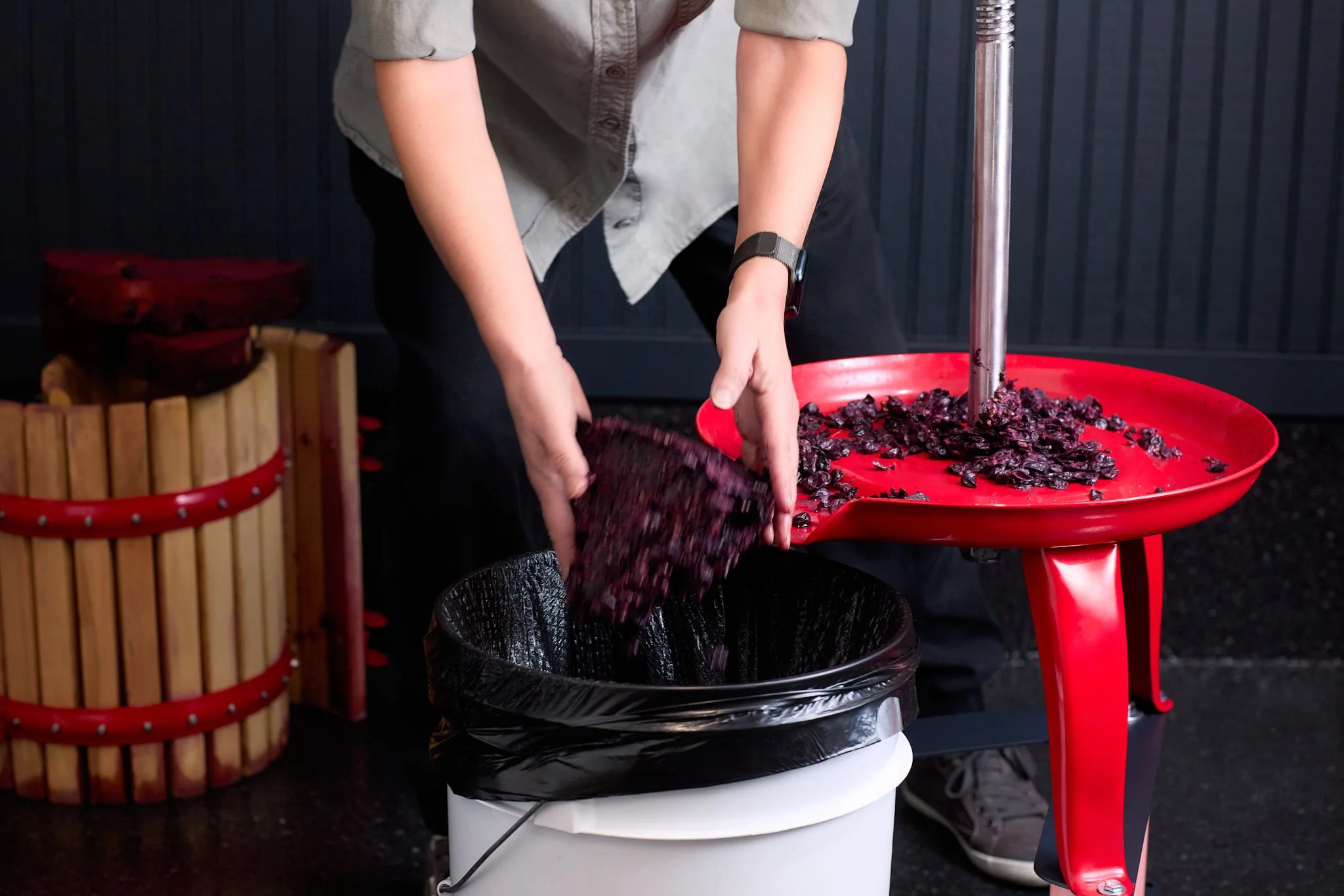
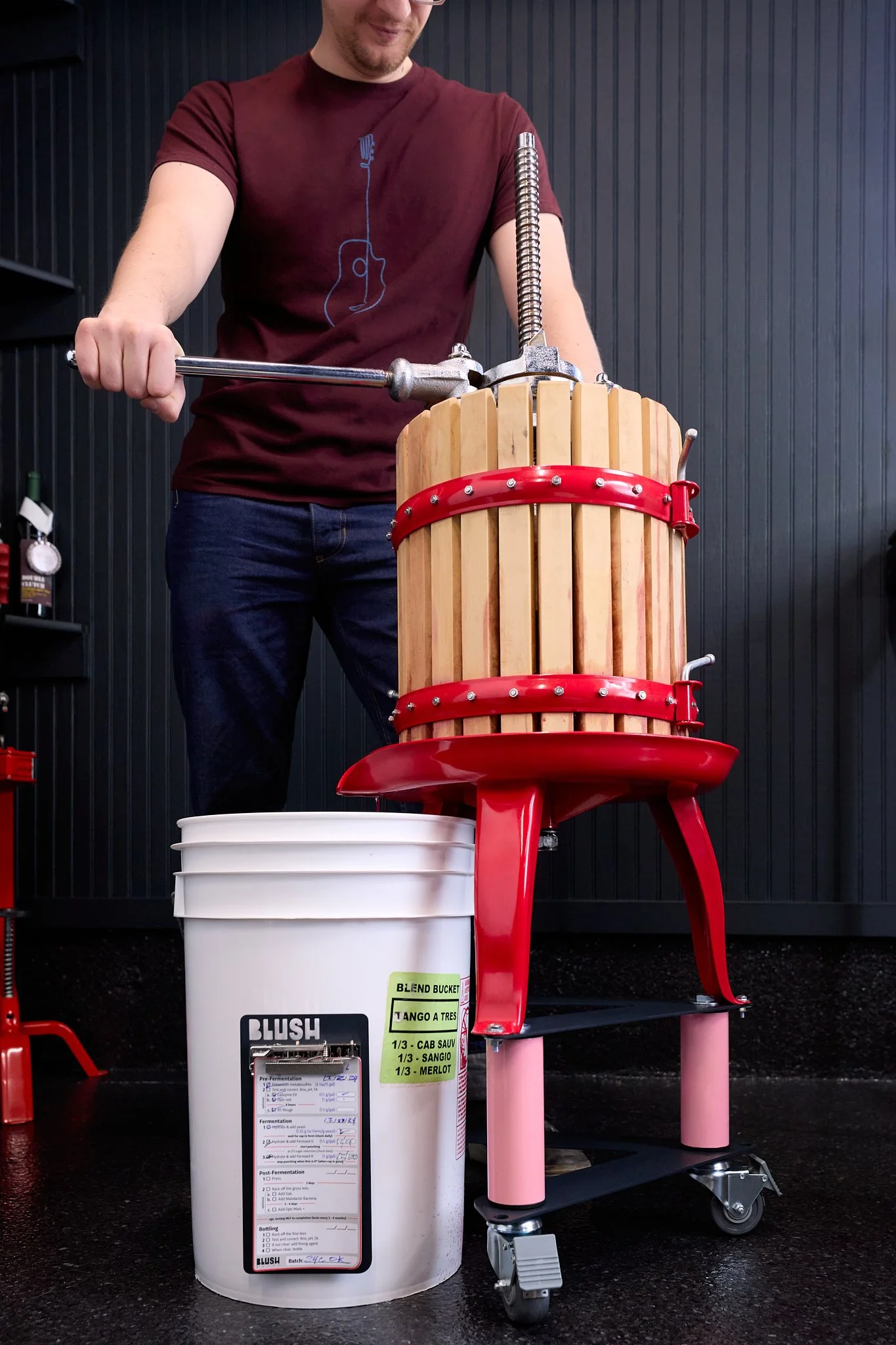
Press height precisely aligned for direct collection into a standard 6-gallon bucket
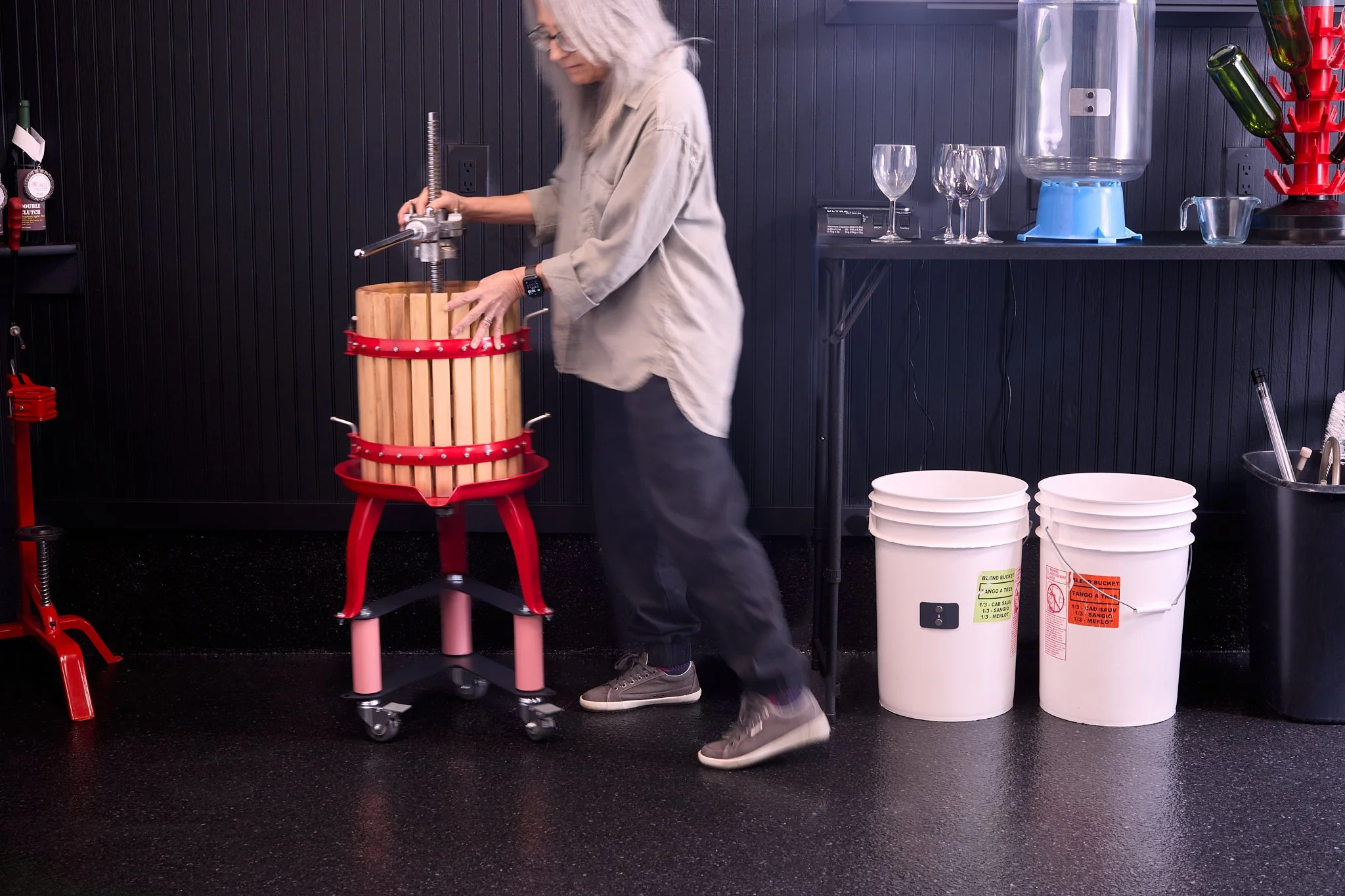
Plinth in use - mobile enough for tight spaces, stable enough for a full press load
Aesthetics
Most winemaking equipment shares a narrow visual vocabulary - utilitarian, functional, and largely indistinguishable from one another. Plinth was designed to reject that without rejecting the context it lives in.
The approach was structural honesty - every element of the form is load-bearing or functional, nothing is hidden behind a facade or added for decoration. The triangular steel frame, the exposed bolts, the pink tubes - all of it is visible because all of it is necessary. The pink is part of the Blushworks brand language, drawn from the "blush" in the name, and chosen to complement rather than compete with the deep reds of the press hardware it sits beneath.
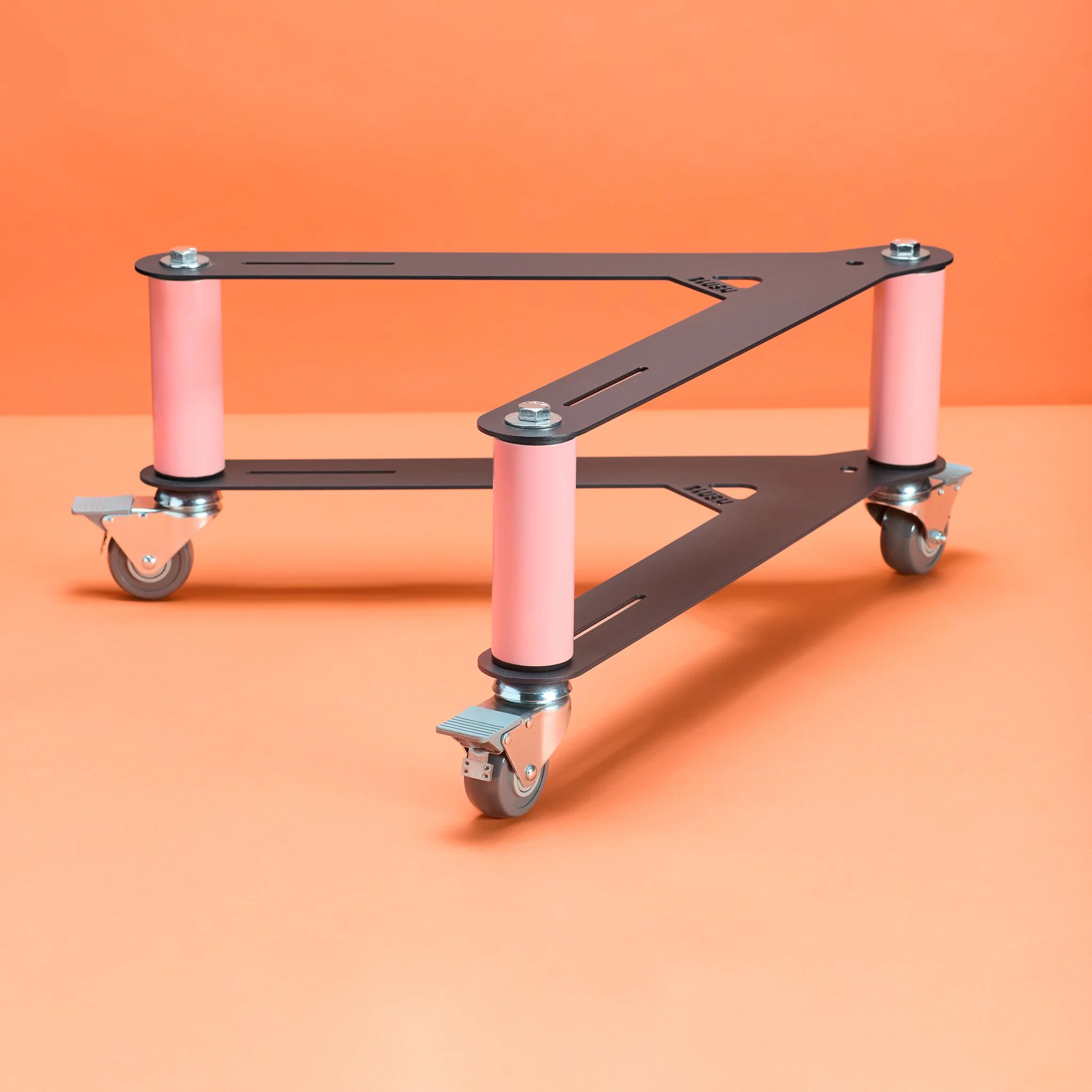
Plinth - powder coated steel frame, pink tubes, and visible hardware
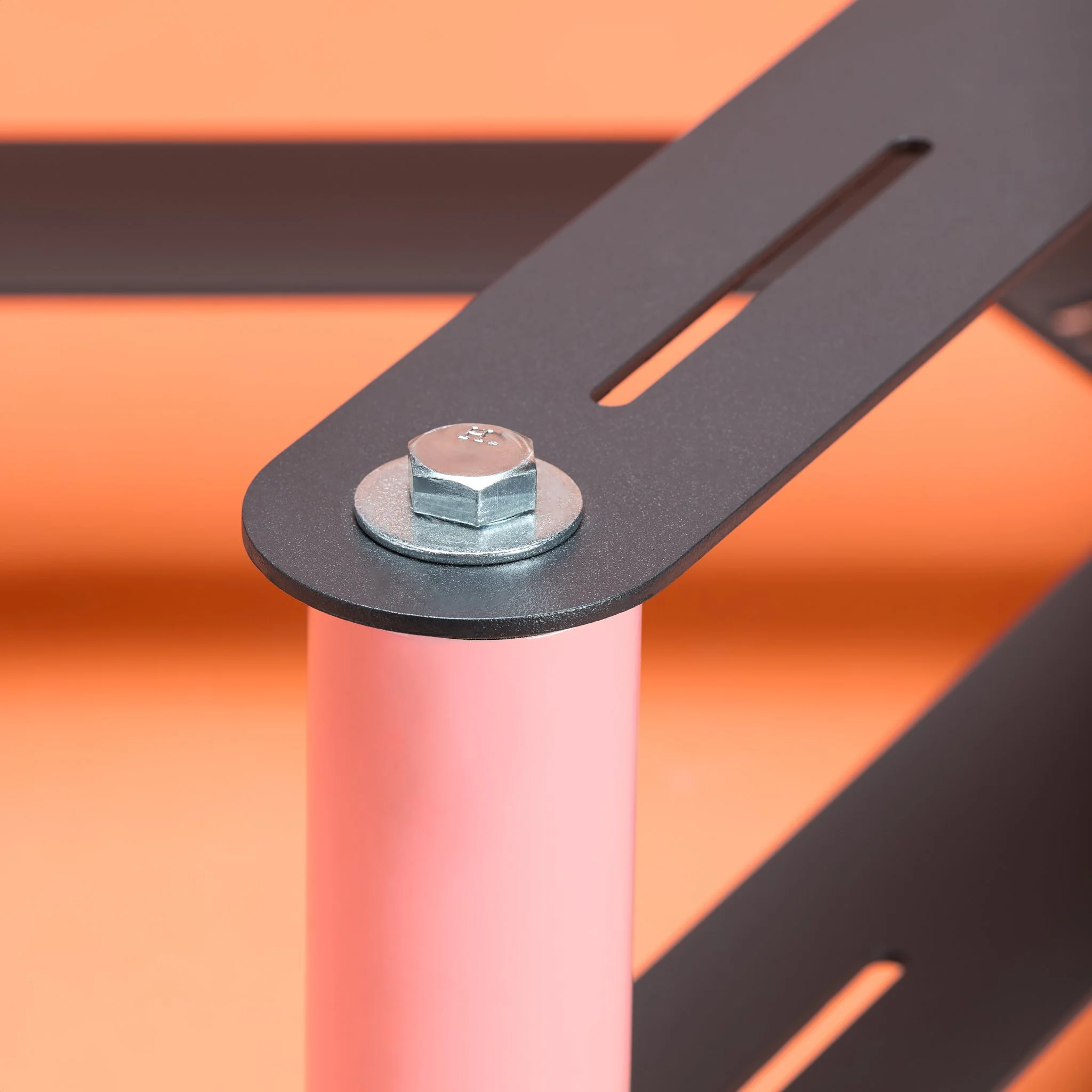
Bolt and tube joint detail - structural honesty in the connection
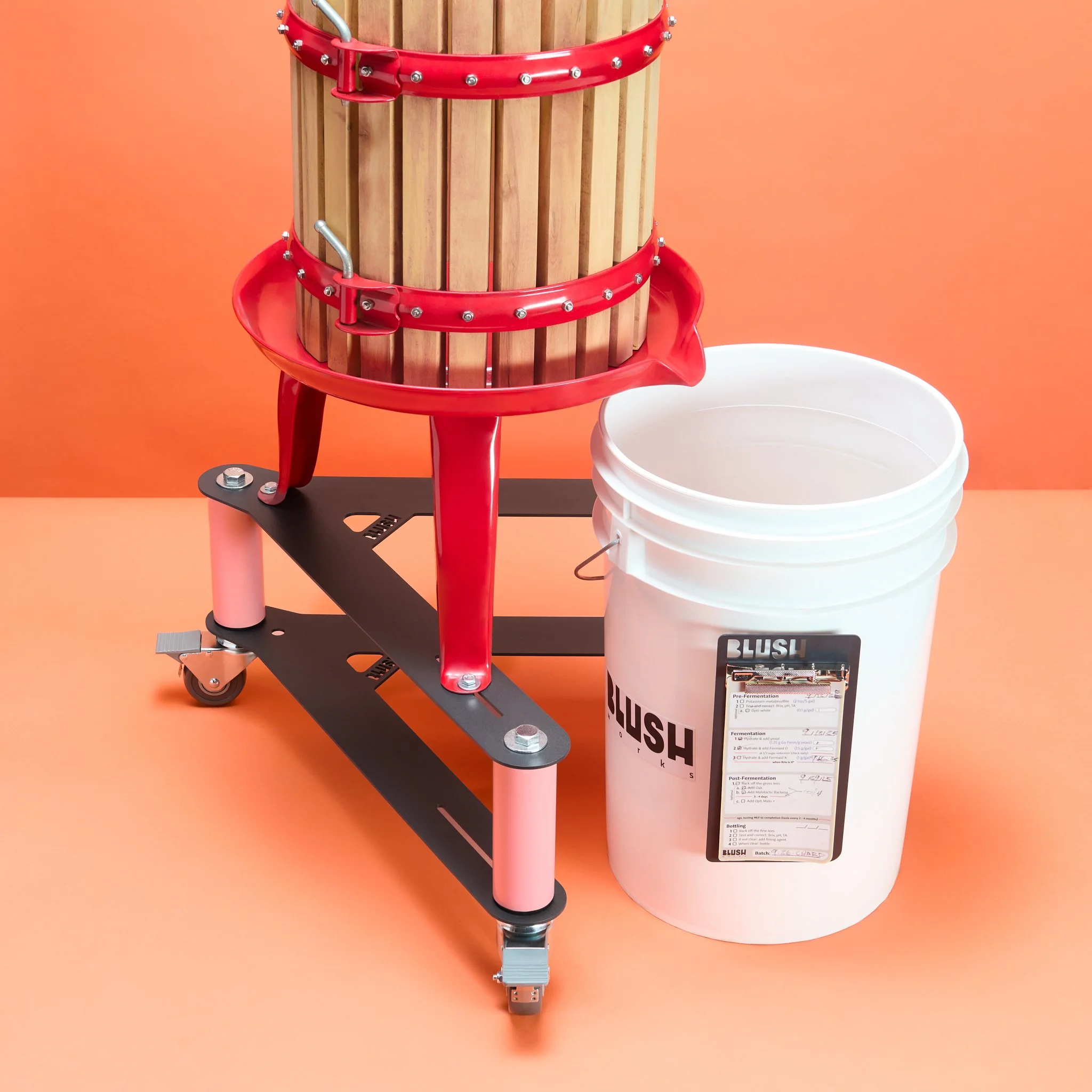
Plinth with press and bucket - complementary to the red press hardware it sits beneath
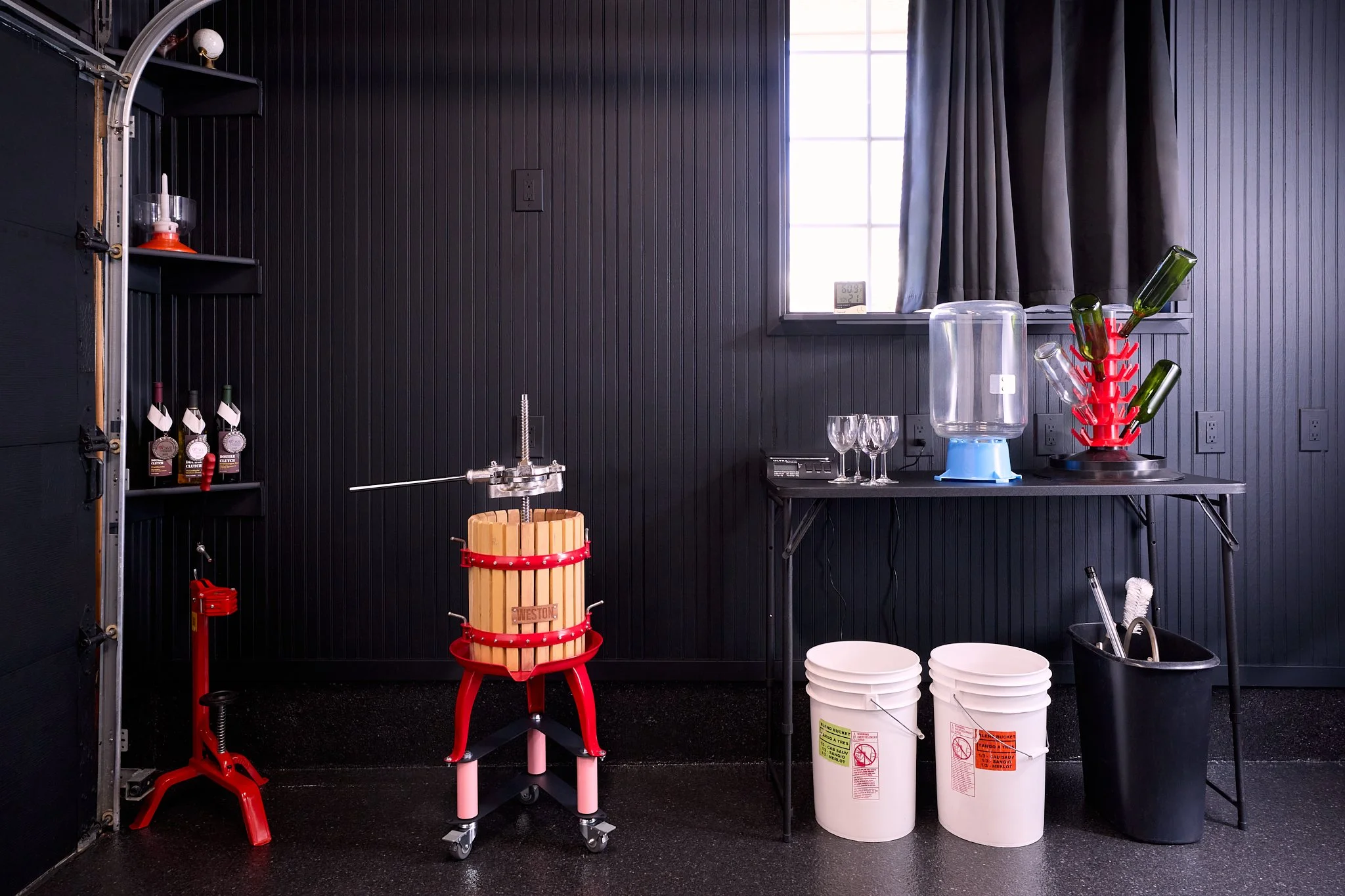
In a working winemaking space - a tool that looks considered, yet functional
Outcome
Plinth is launching in 2026 as Blushworks' second product, sold direct-to-consumer through blush-works.com. The design is patent-pending. Early response at trade shows across the US confirmed strong interest from home winemakers looking for purpose-built equipment that matched the seriousness of their craft.