2026 · FOUNDER, LEAD DESIGNER
Stack
A Deck Box as Unique as Your Deck
Quick Facts
Designed and prototyped Stack independently, from personal need through shipping product
Developed a layered acrylic construction system solving for low-volume manufacturing and per-unit customization simultaneously
Defined configuration logic spanning deck format, sleeve type, and layer/color combinations
Sourced and managed a laser-cutting service partner, with no tooling required
Built and launched direct-to-consumer sales
Validated demand through a 25-unit initial production run

Opportunity
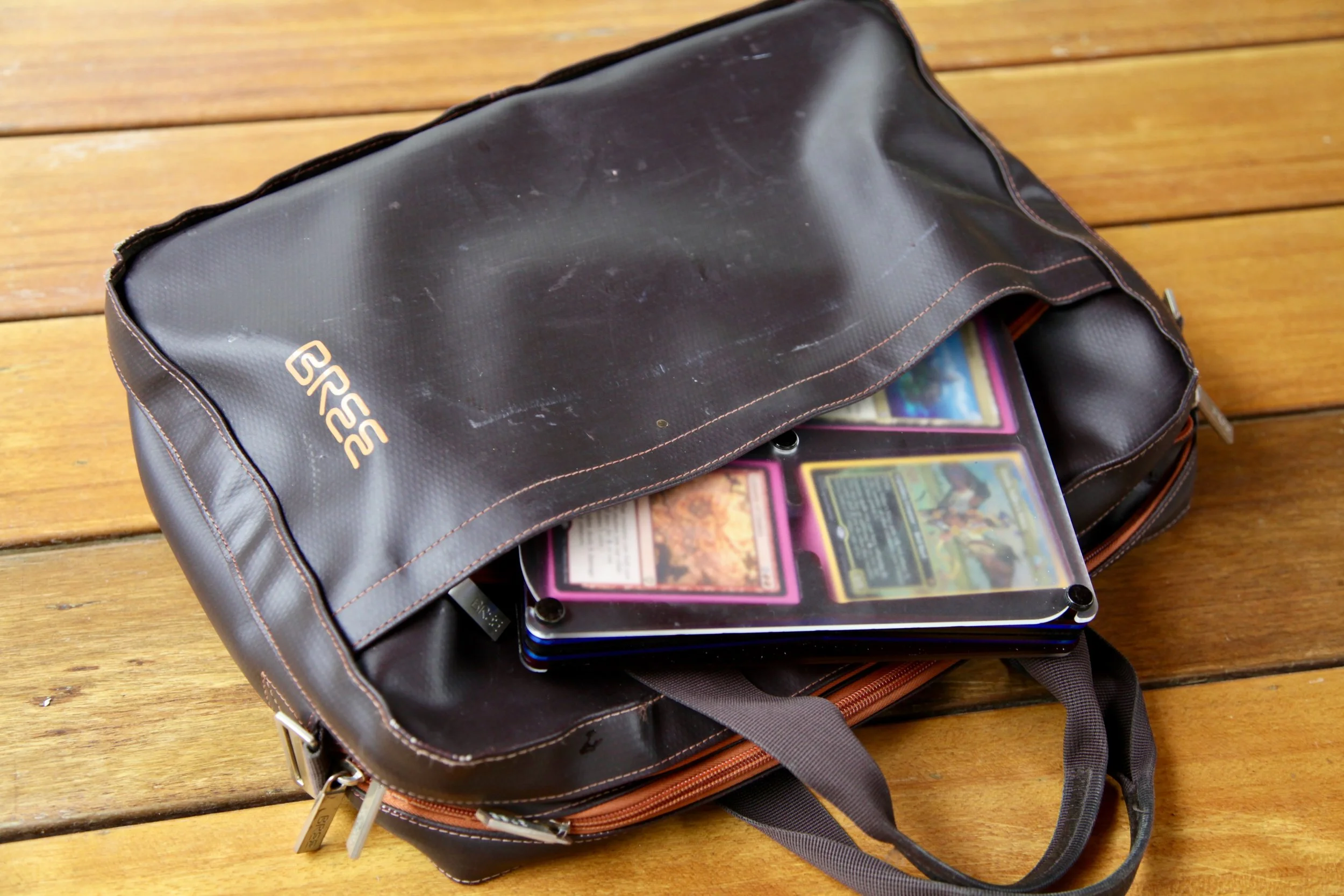
I made the first Stack for myself. Every deck box on the market was the same cube — functional, but thick, anonymous, and sized to no particular way of playing. I carry a messenger bag; the cube didn't fit. So I cut acrylic layers and stacked them until something did.
What turned it from a personal fix into a real project was the response. Other players at the table wanted to know where to get one. That's a different kind of validation than a market gap on paper — it's someone asking to buy the thing sitting in front of them. It also set the terms for what came next: this had to hold up as an actual product, not a one-off favor for friends, without inheriting the tooling, MOQs, or supply chain infrastructure that projects like Noisy Clan or Blushworks were built around. Twenty-five units, was the smallest real test of whether the idea could stand on its own.
Brief
A Form With No Compromise
Configured, Not Molded
More Than Storage
A Form With No Compromise
Low volume and true customization are usually solved separately, if they're solved at all — hand-finished shells or short-run casting can clear the volume bar, but not without new tooling every time a unit changes.
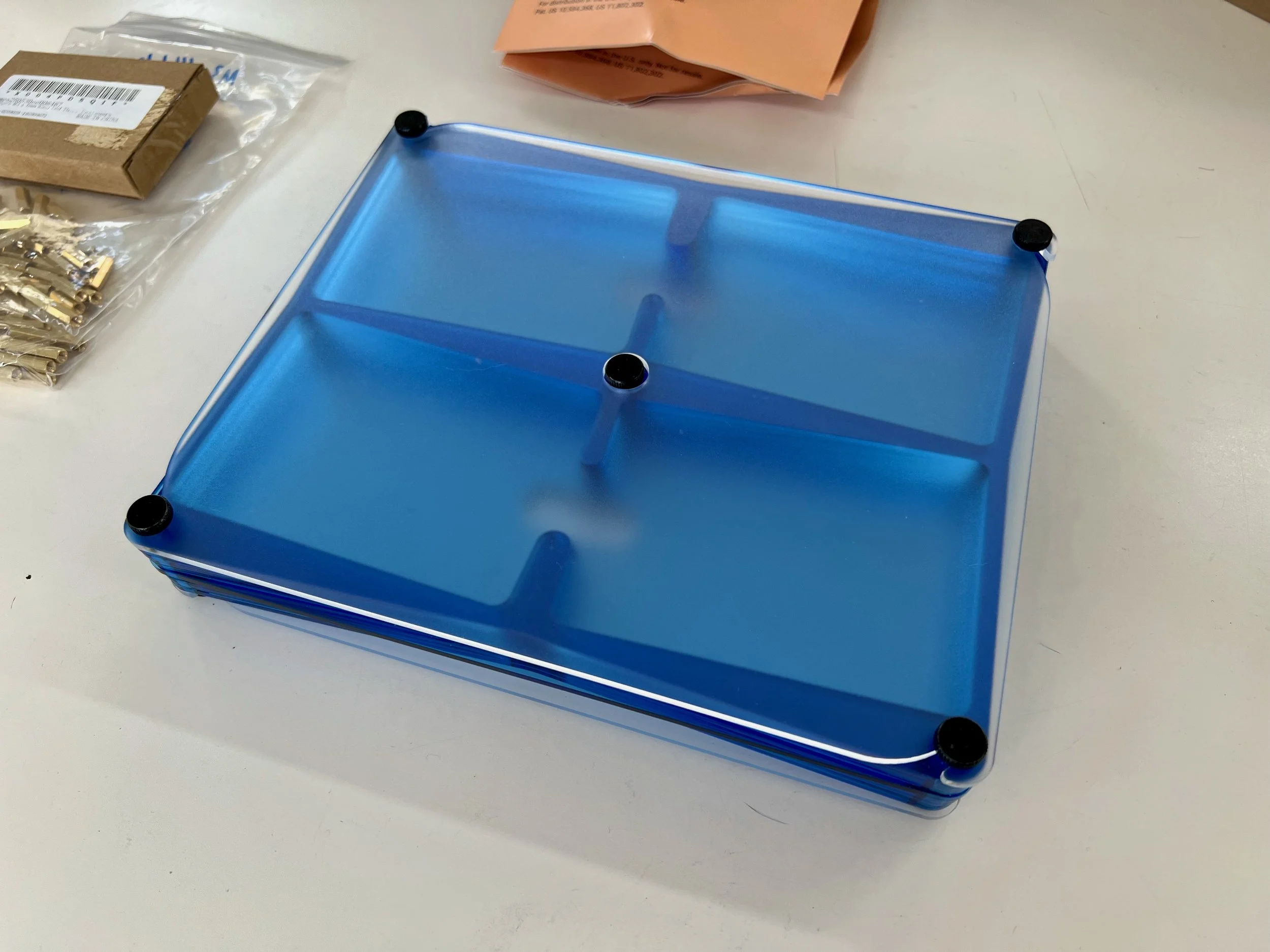
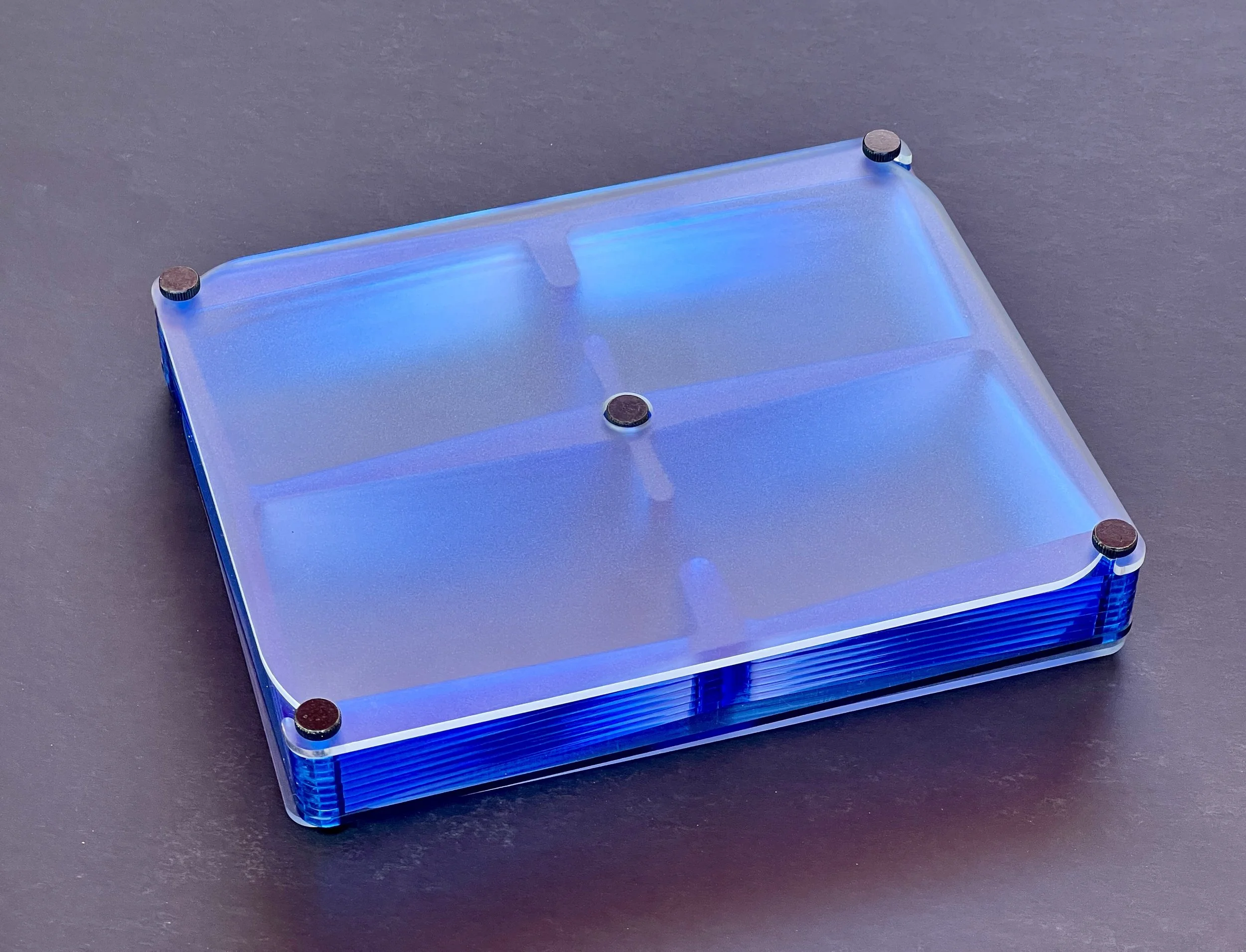
Layered acrylic construction was the one approach that solved both at once. No bending, no machining, no finishing beyond what the laser leaves behind — every unit comes off the same process with no die, mold, or fixture standing between an idea and a finished box. That's what let Stack exist at a volume of one, and then twenty-five, without the economics of the method changing shape underneath it.
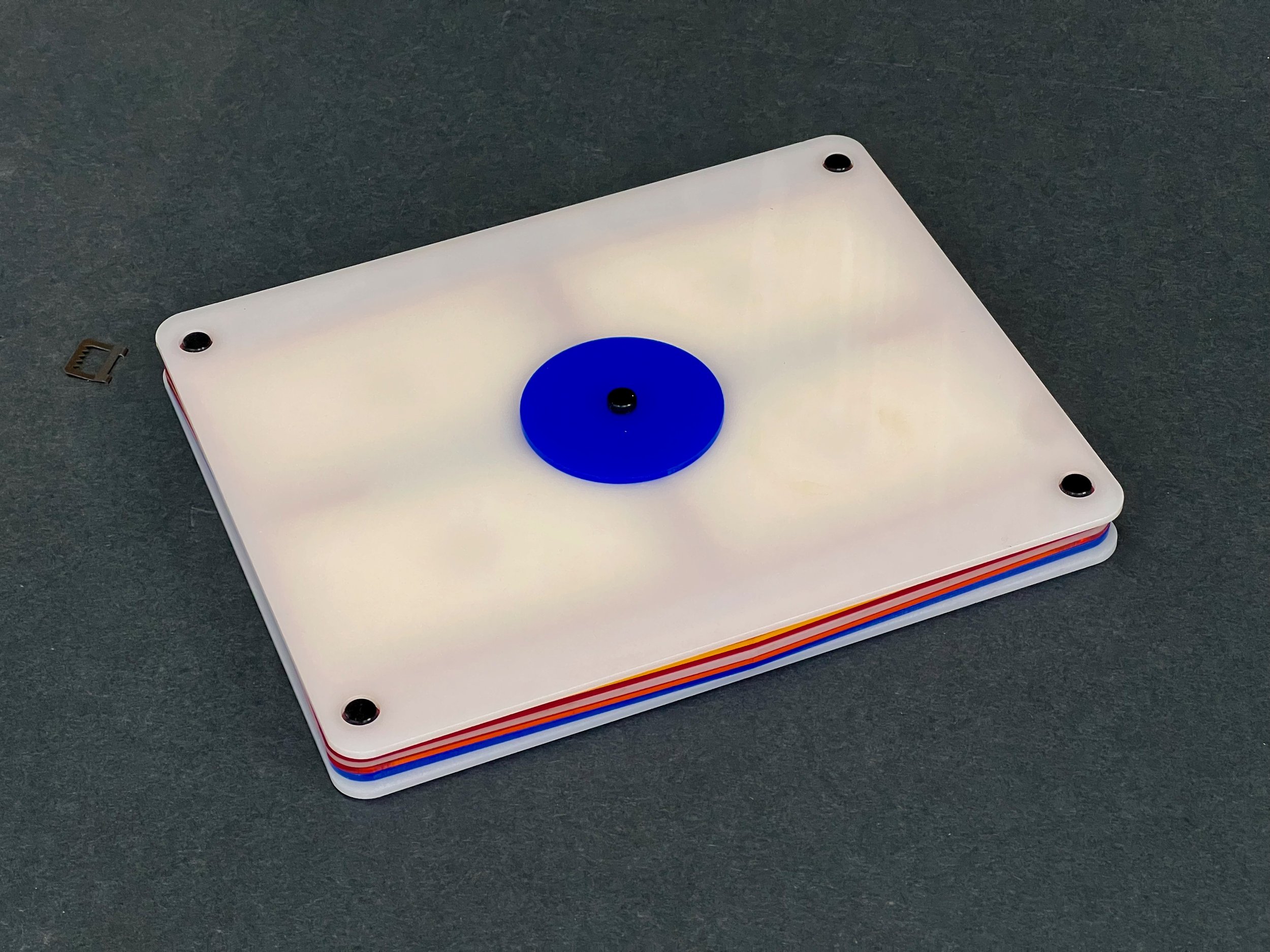
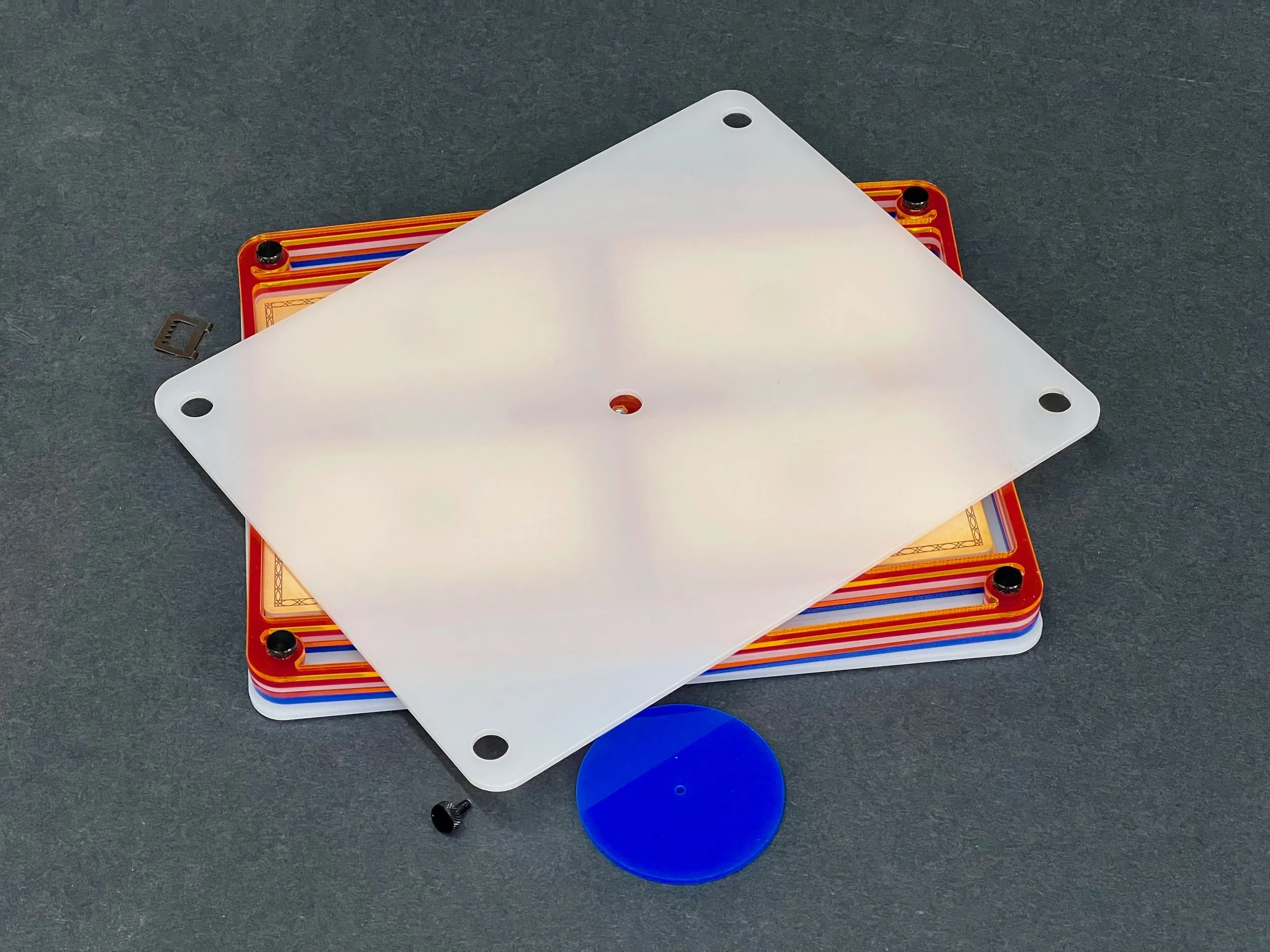
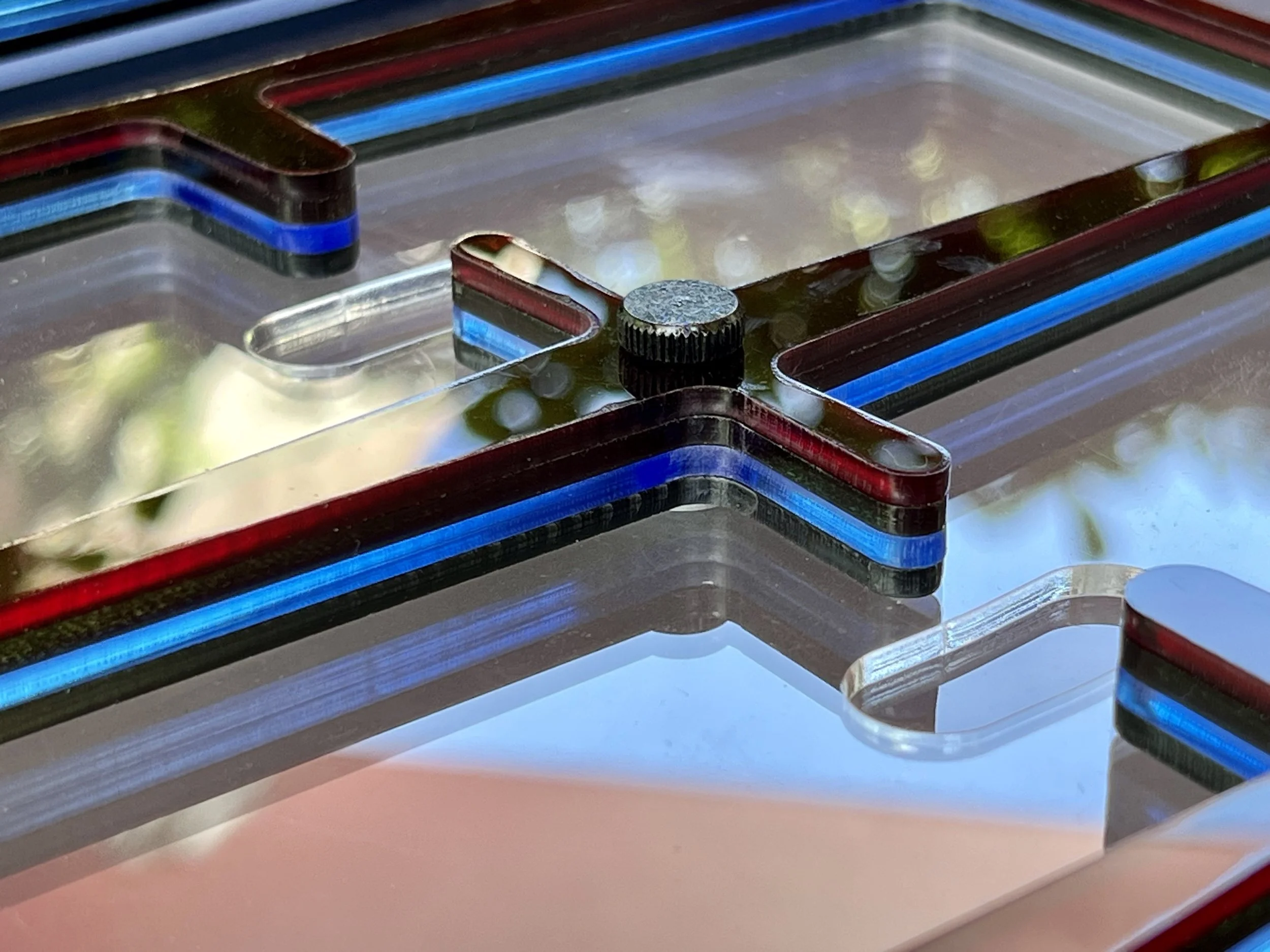
Initial prototypes used a single center screw and disc to hold the lid on
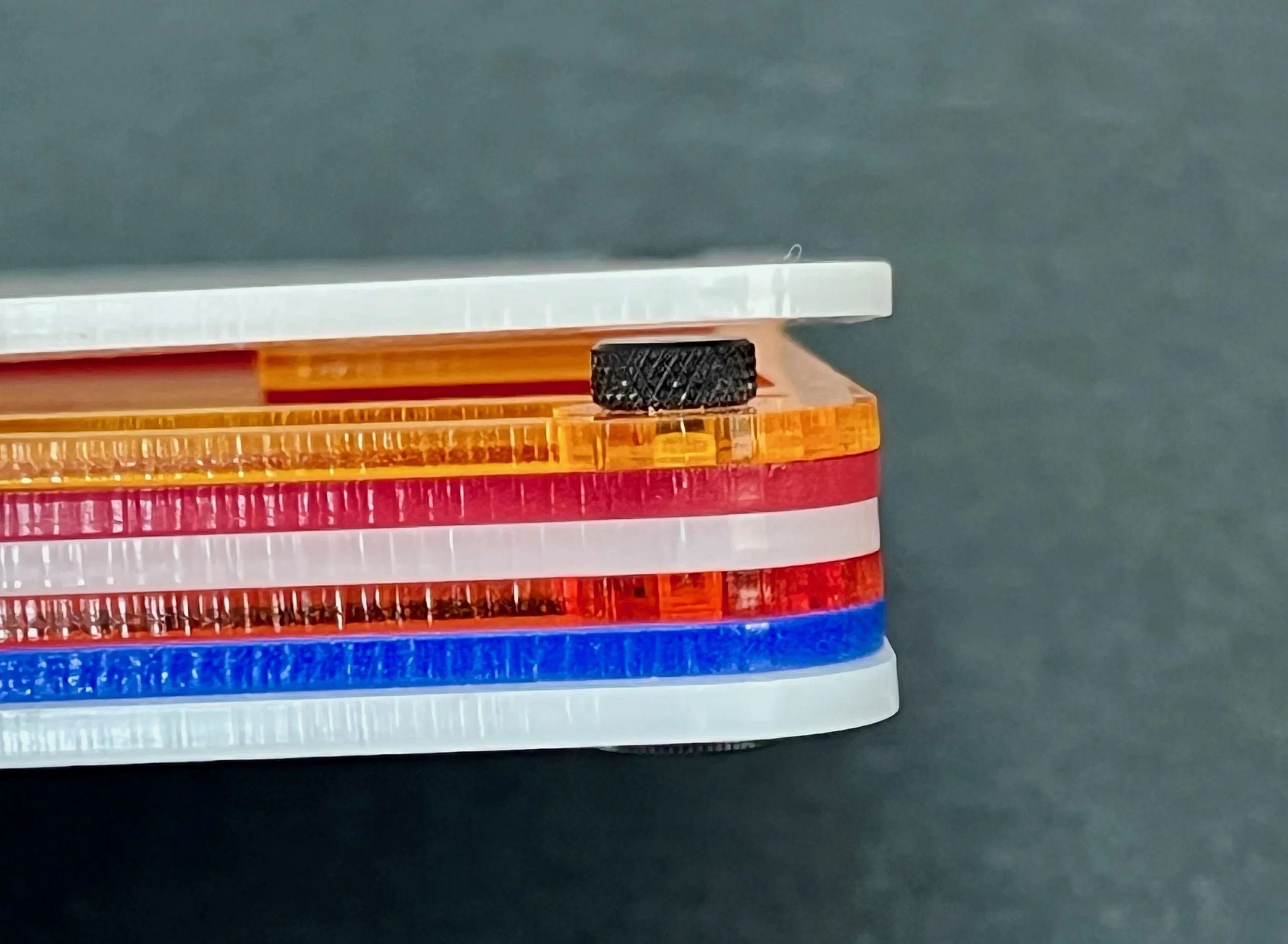
But this allowed the corners to lift under minimal force - unacceptable for securing a deck
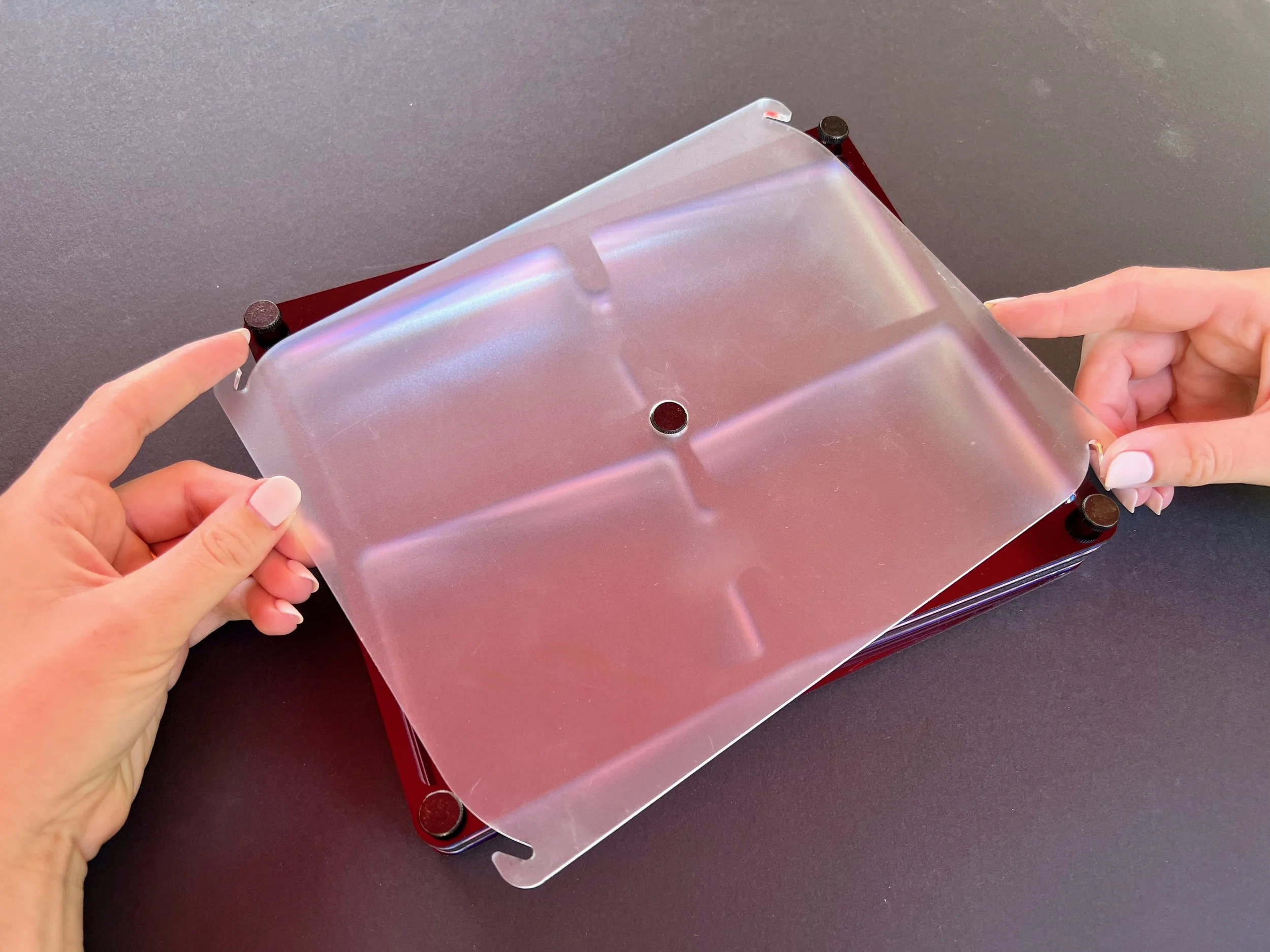
The final design has four corner thumb screws that, when turned a small amount, allow the lid to twist clear and be removed
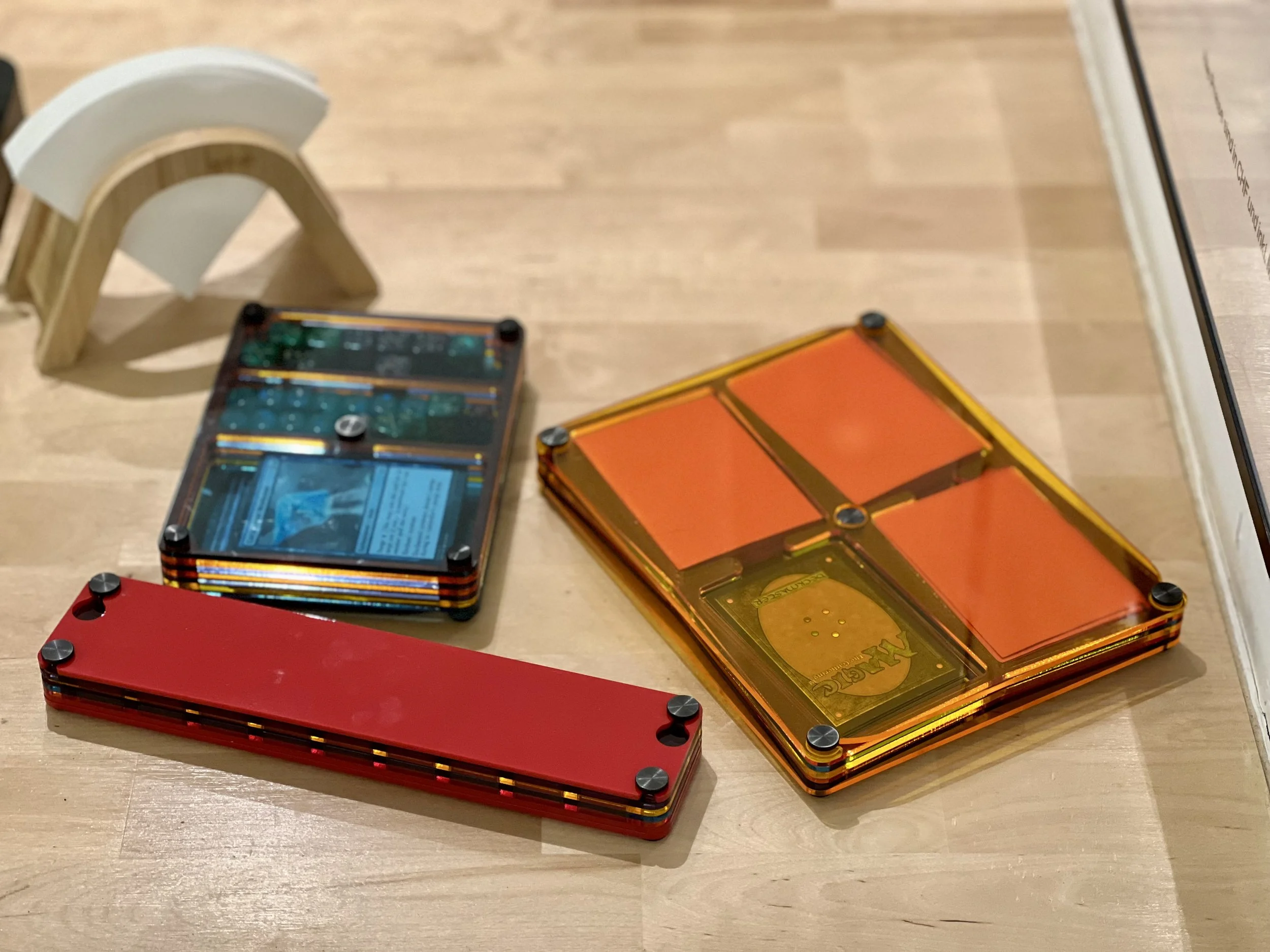
Various configurations and other use cases (dice, accessories, etc.)
Configured, Not Molded
The same construction is what makes customization real, not just possible.
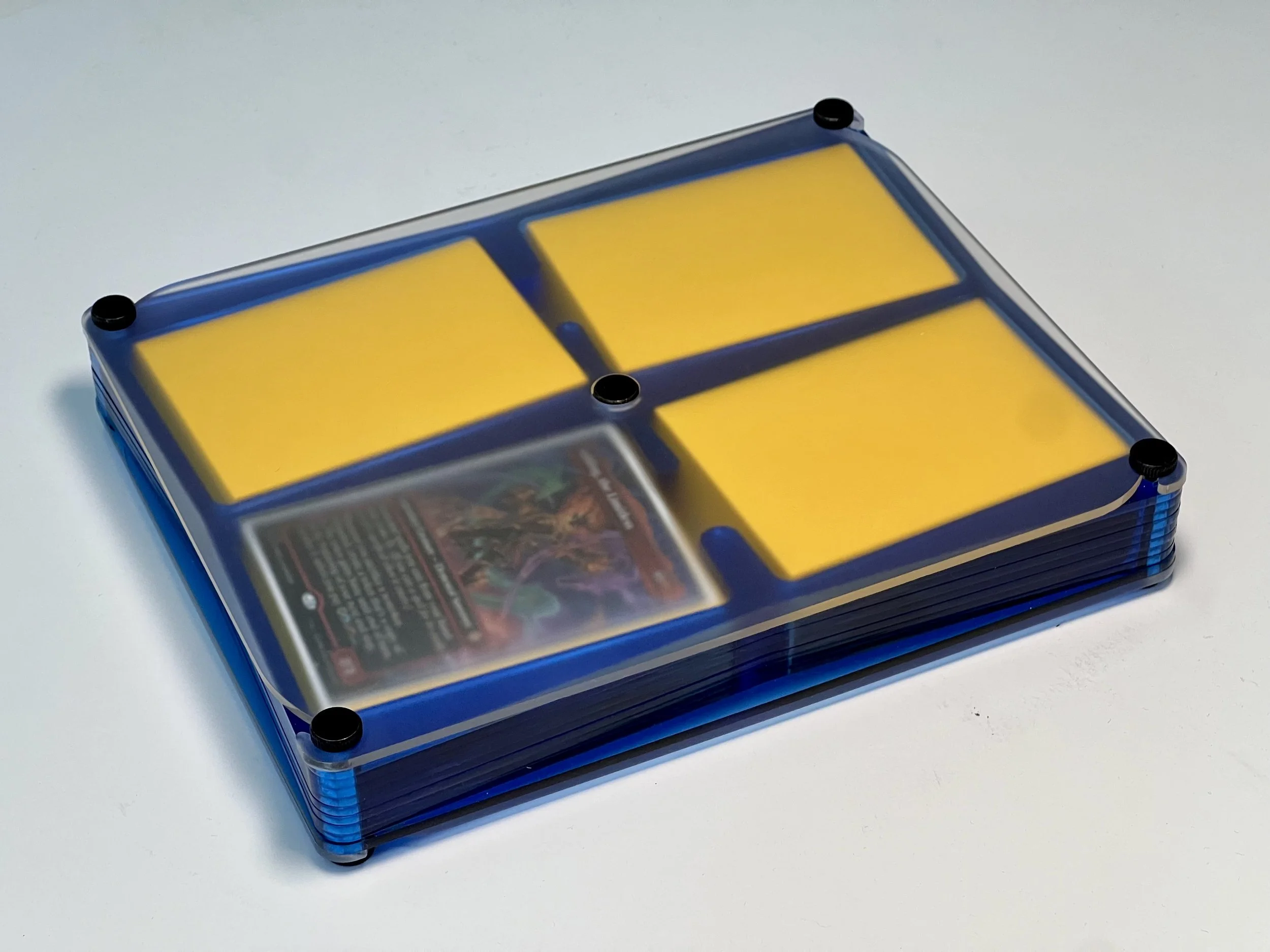
Spacer length is the only variable between a four-layer single-sleeved box and a ten-layer double-sleeved Commander build with tokens and sideboard - one construction spans every format, sleeve type, and capacity need.
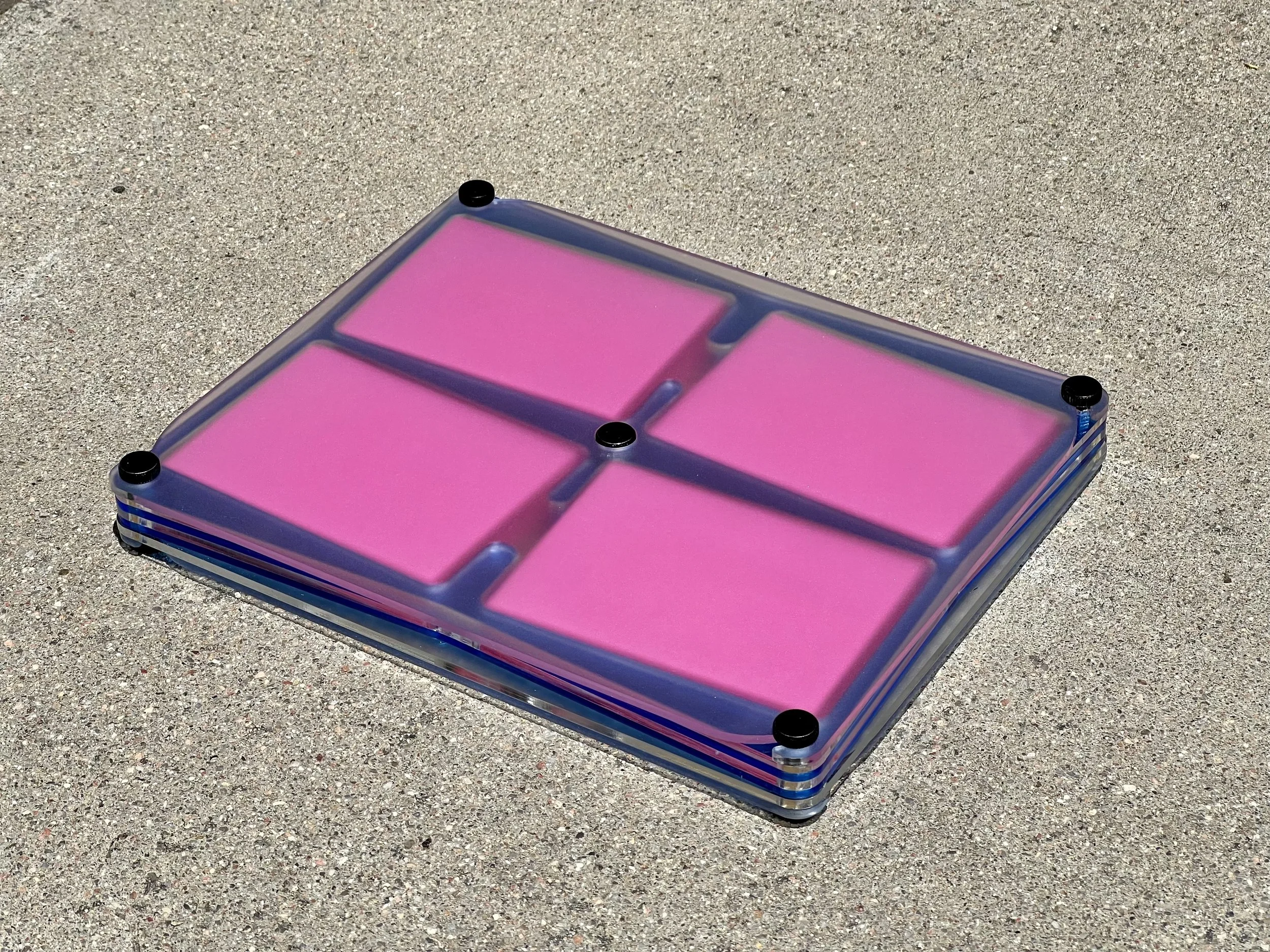
Color follows the same logic: each layer specified individually at order time, in any combination of five mana-inspired finishes.
Assembling a Stack - choosing colors, stacking them in a personal order, threading them together - mirrors the act it's built to hold: building a deck is also choosing pieces one at a time and putting them in the order that's yours.
The same flatness that makes acrylic cheap to cut also opens the door to other flat stock later - wood, stone, carbon fiber, etc. - without changing how the box goes together.
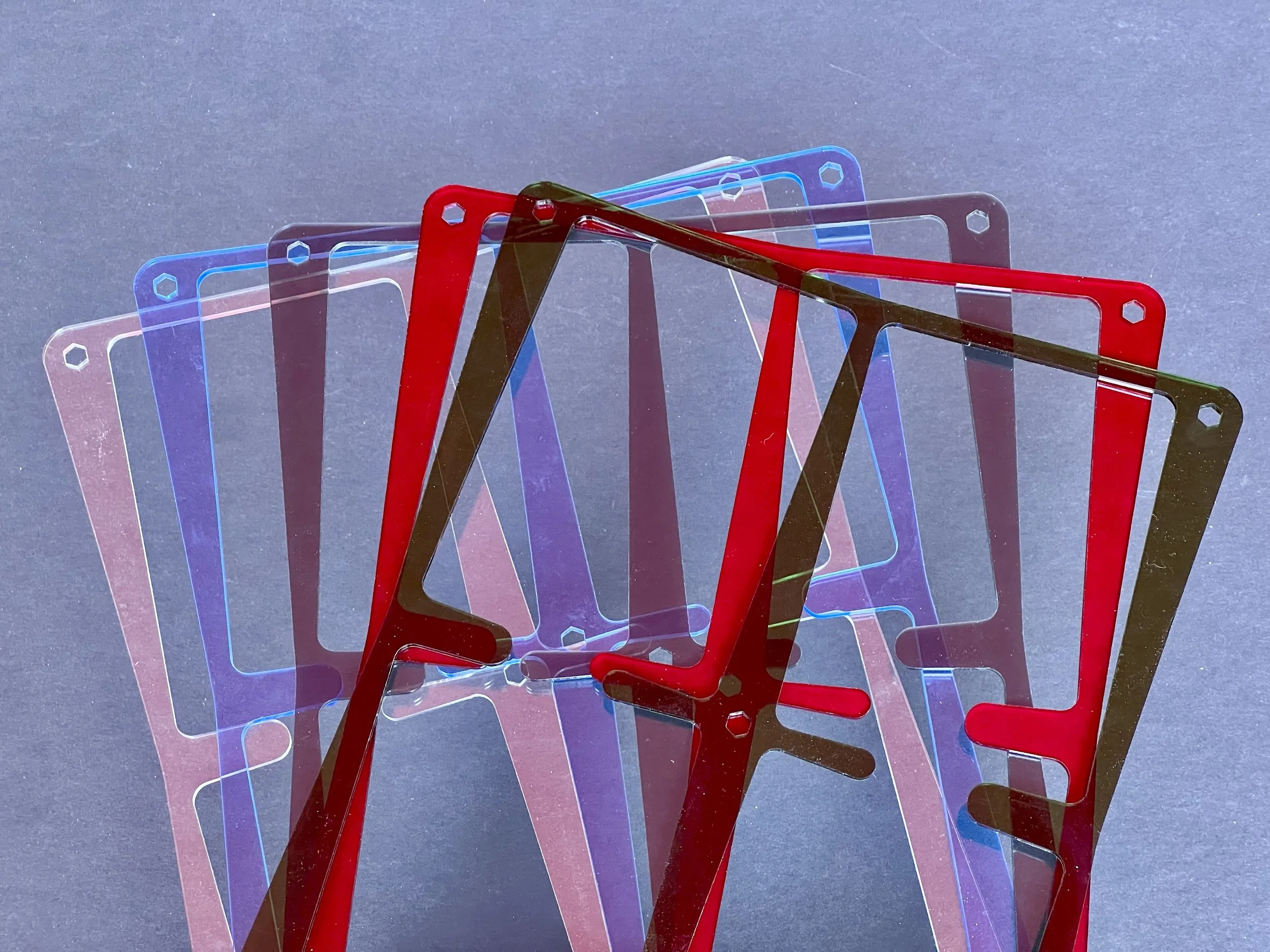
Each layer has identical geometry, so users than specific color and time of order with minimal SKU management
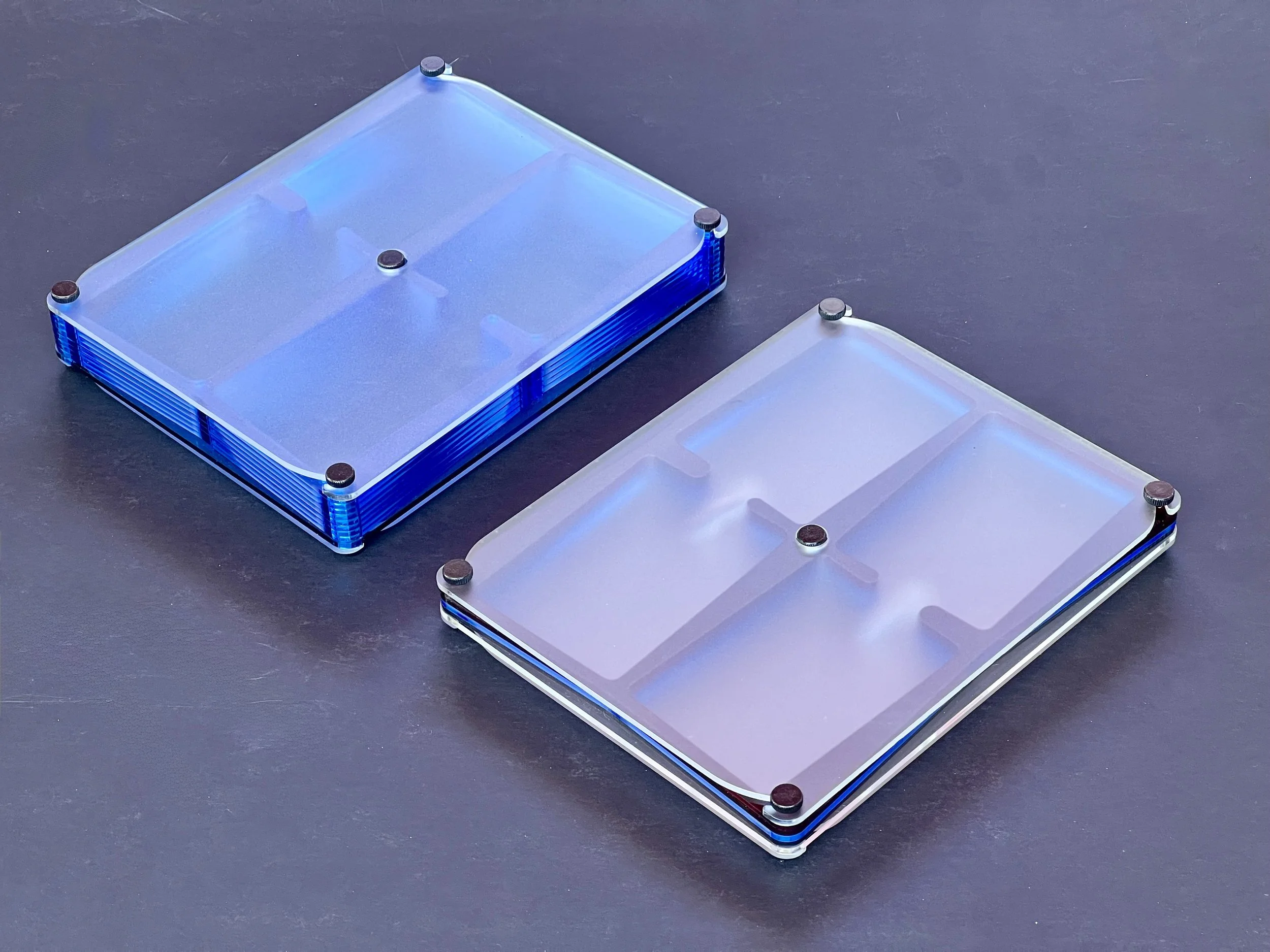
The design adapts to any type of deck situation
A four layer version for the most compact decks

Eight layers to give users more space, either for more cards, double-sleeving, or tokens
More Than Storage
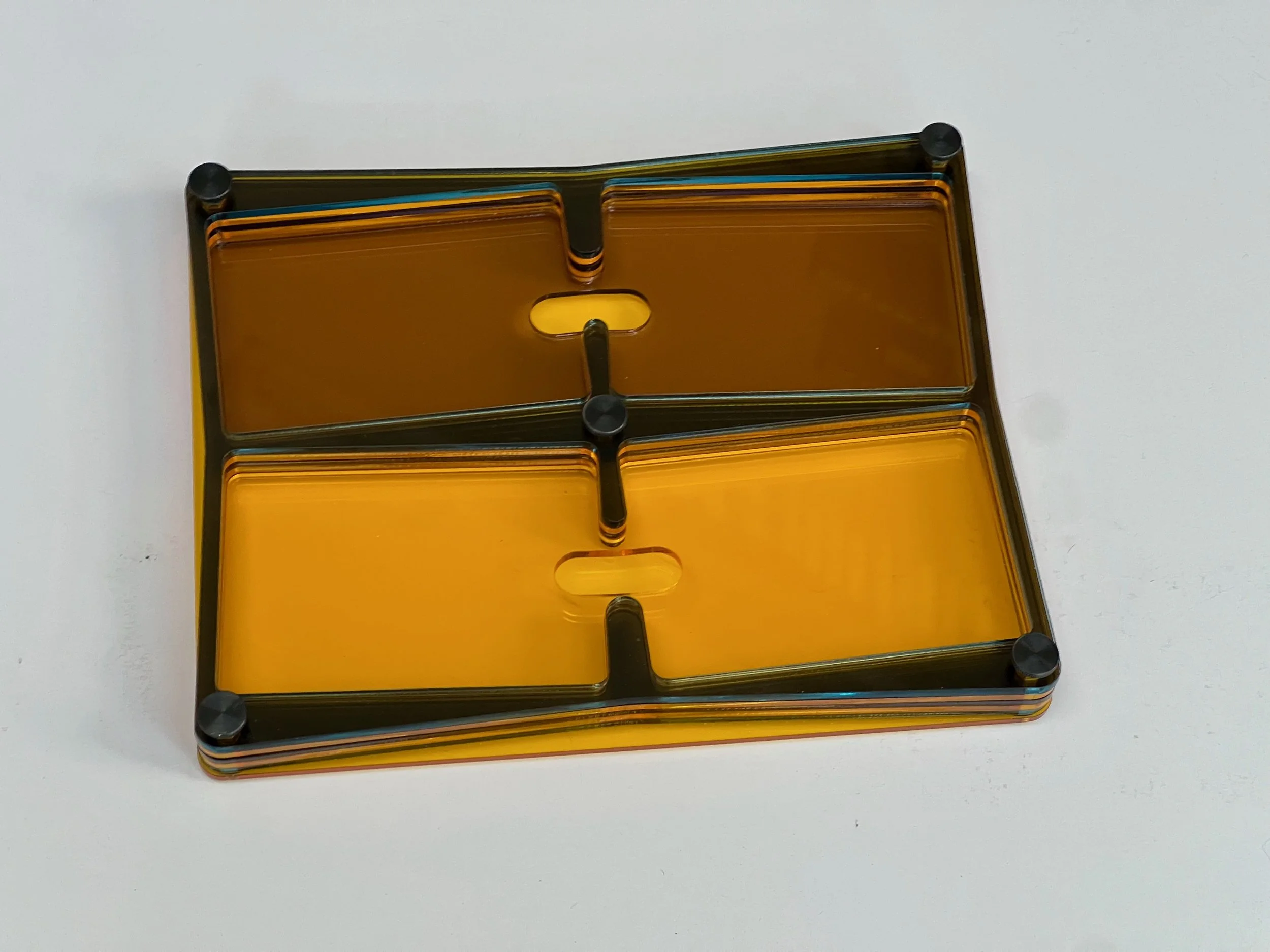
Small details carry as much of the function as the layer system itself. The lid rotates off rather than lifting straight up, so it clears without needing extra height above the stack - useful in a bag, and at a crowded table. The divider layer is cut with a finger notch, so a compartment's contents can be picked up as a single block instead of pinched out card by card.
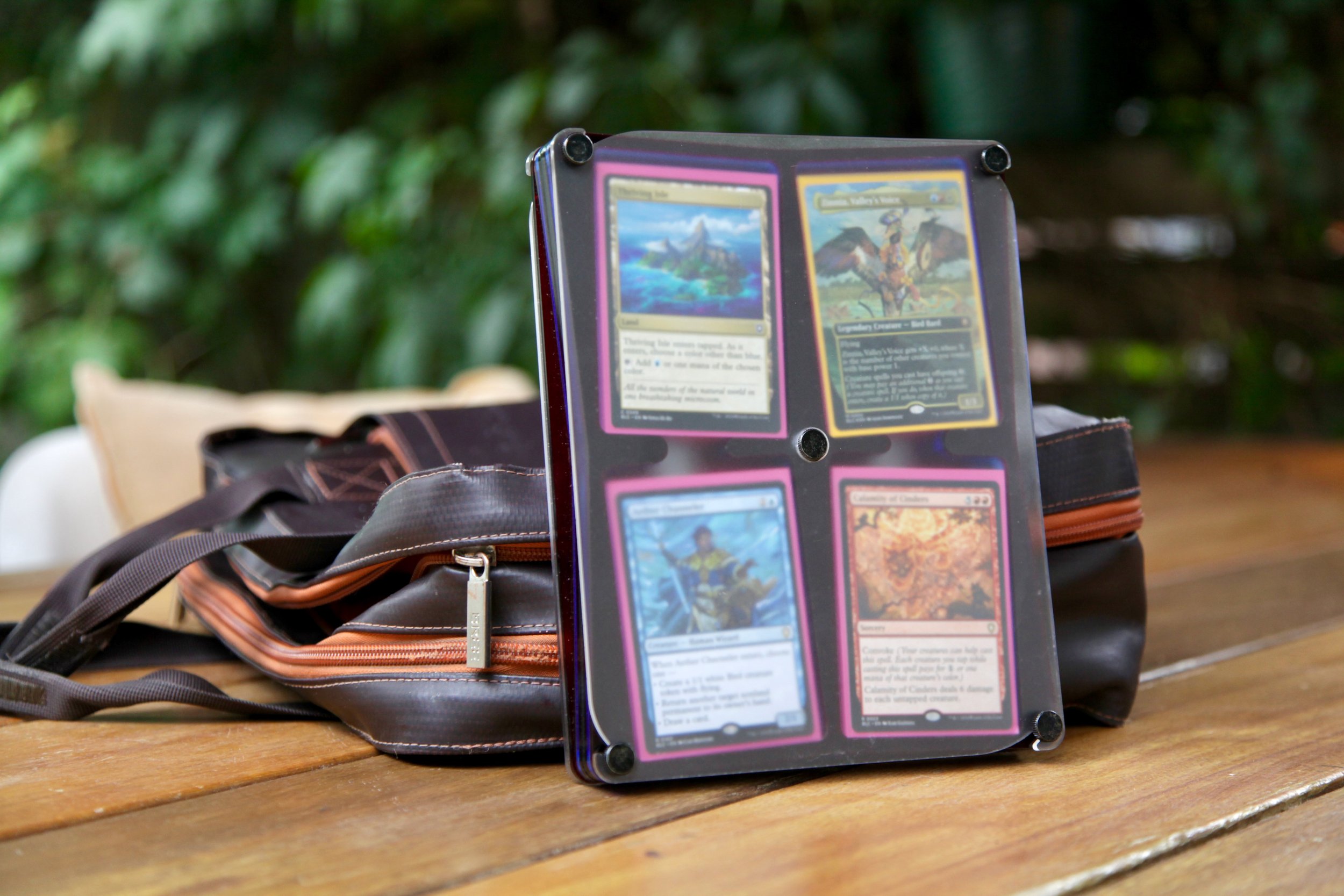
The compartments themselves turned out to do more than store. Once a prototype was on the table, the divided layers naturally became a deck, a graveyard, a command zone, an exile pile - the box organizing game state instead of just holding cards between sessions. That wasn't part of the original brief. It surfaced only once a working Stack existed to actually play with, and it changed what the product was for.
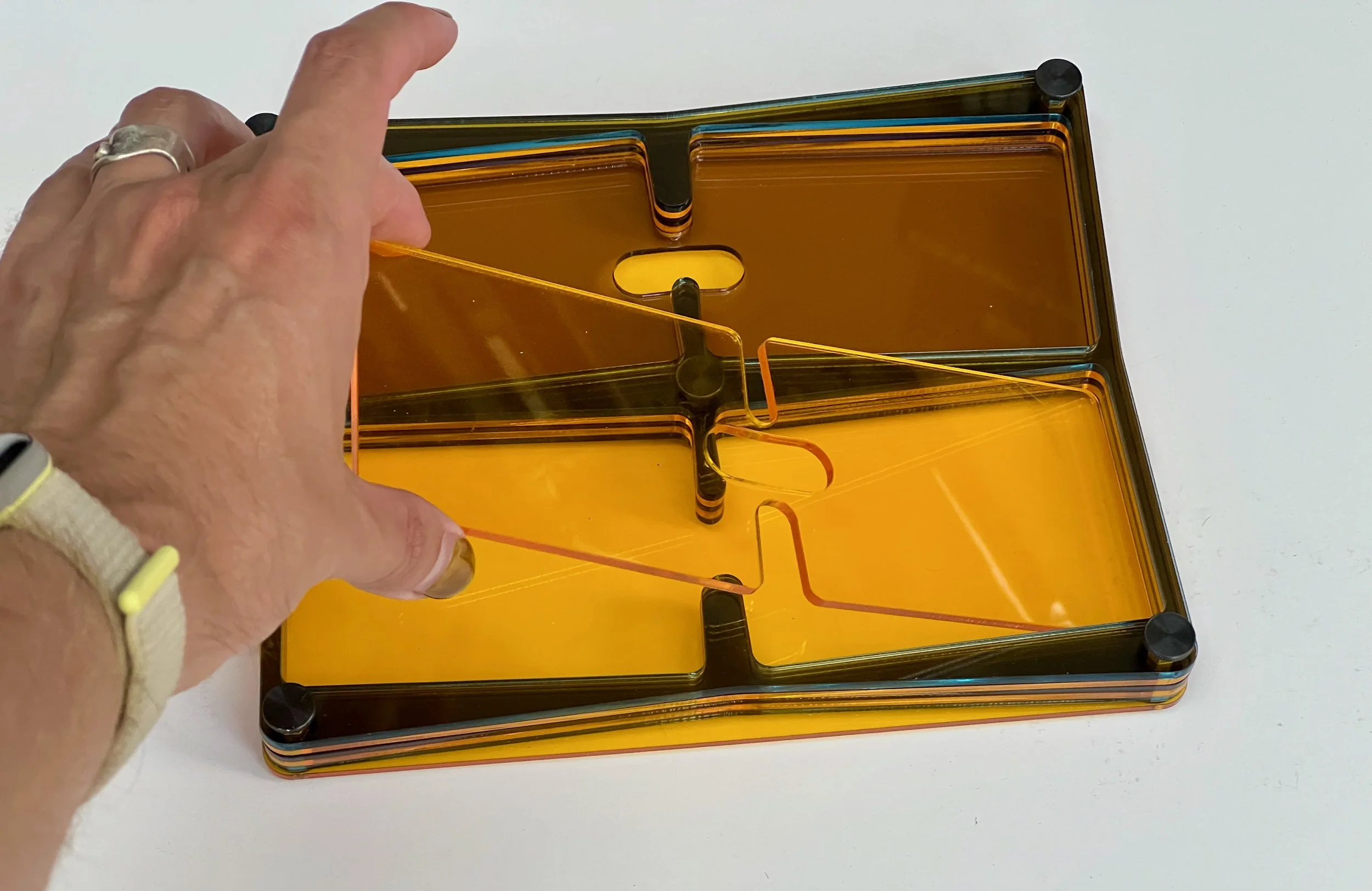
Early tests of using waste material to provide a lifting area
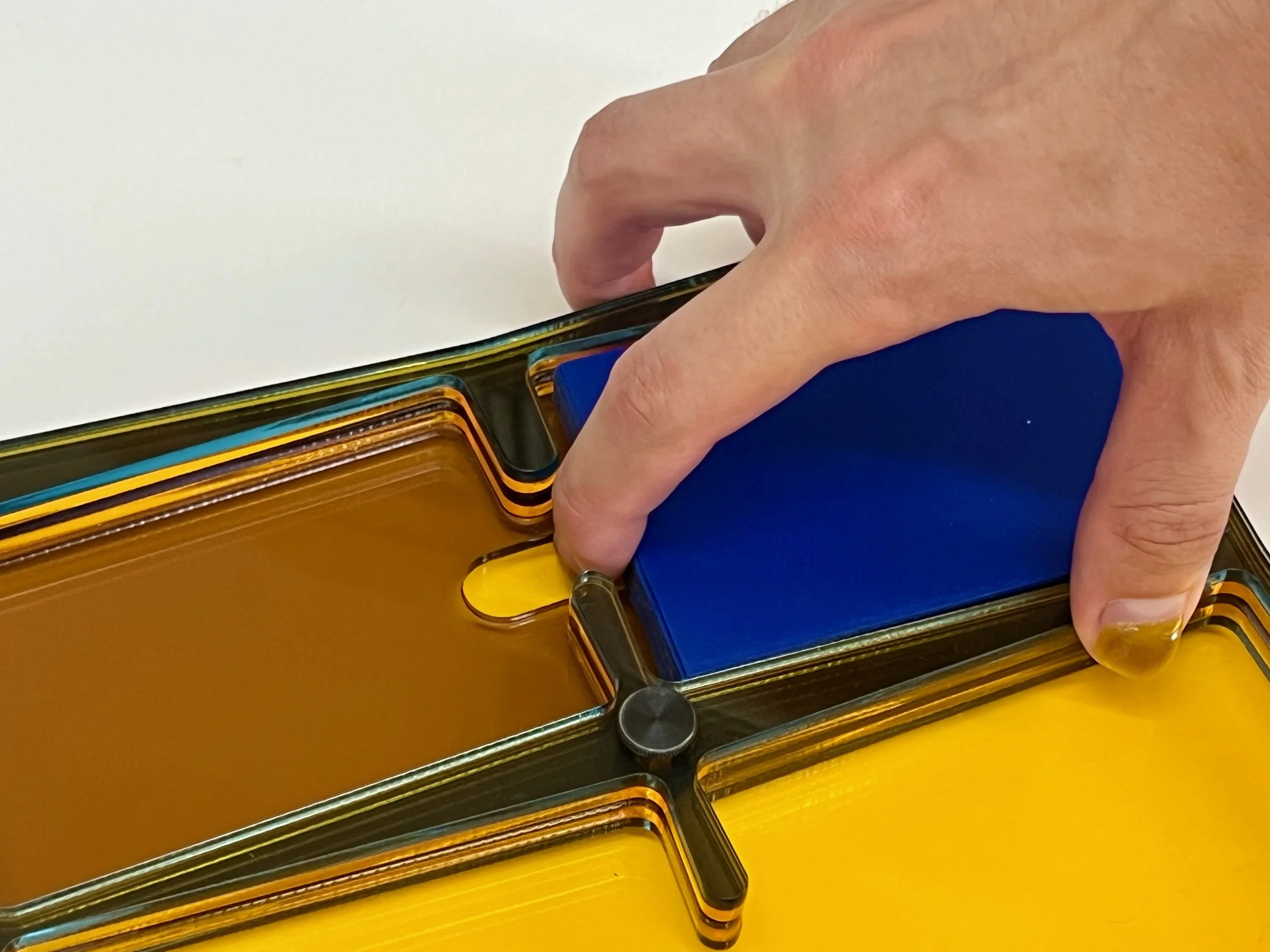
First tests found it hard to lift the lowest card from the flat acrylic easily
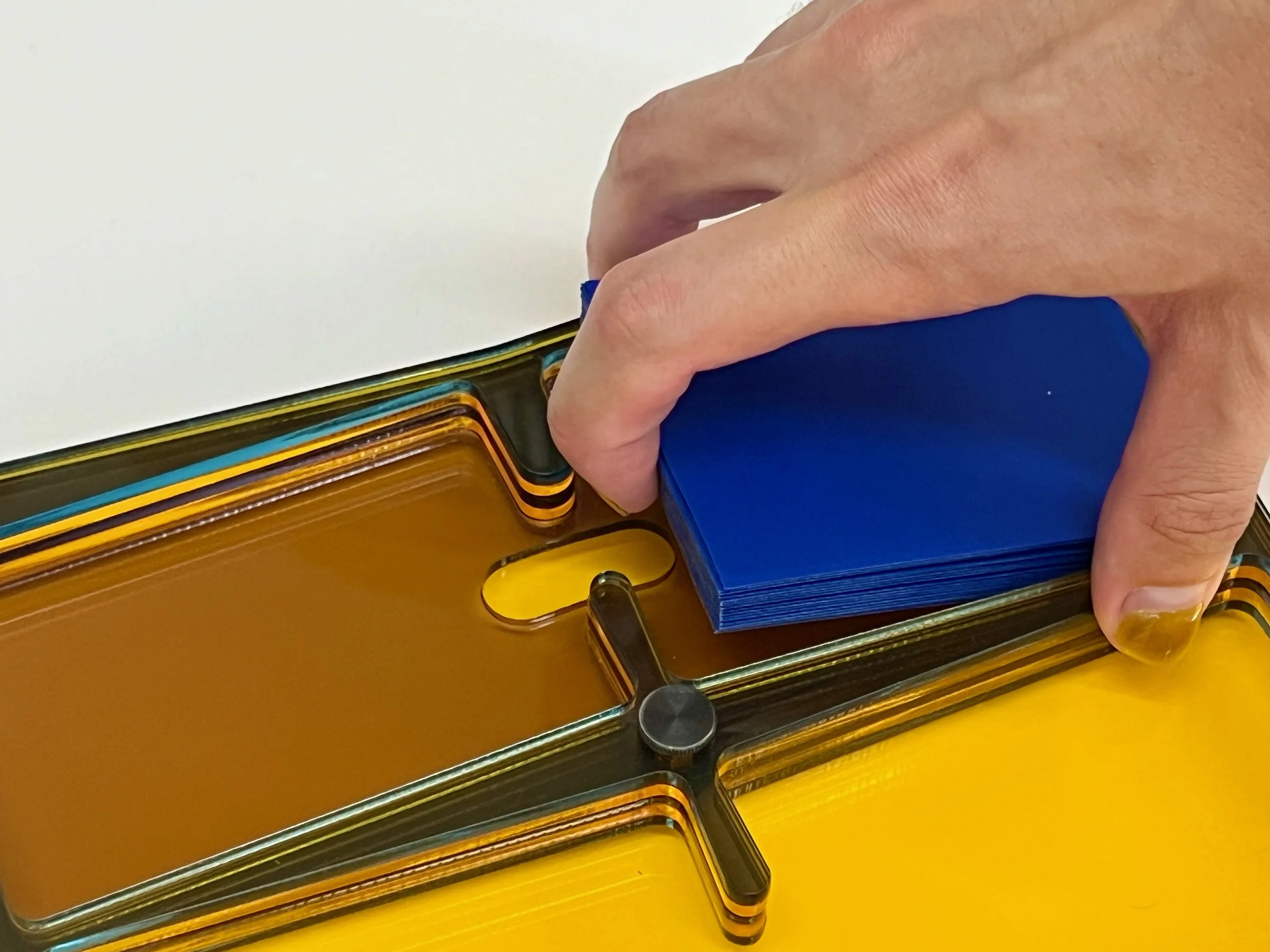
With the lifter cutout a finger can easily get purchase under the card stack and lift
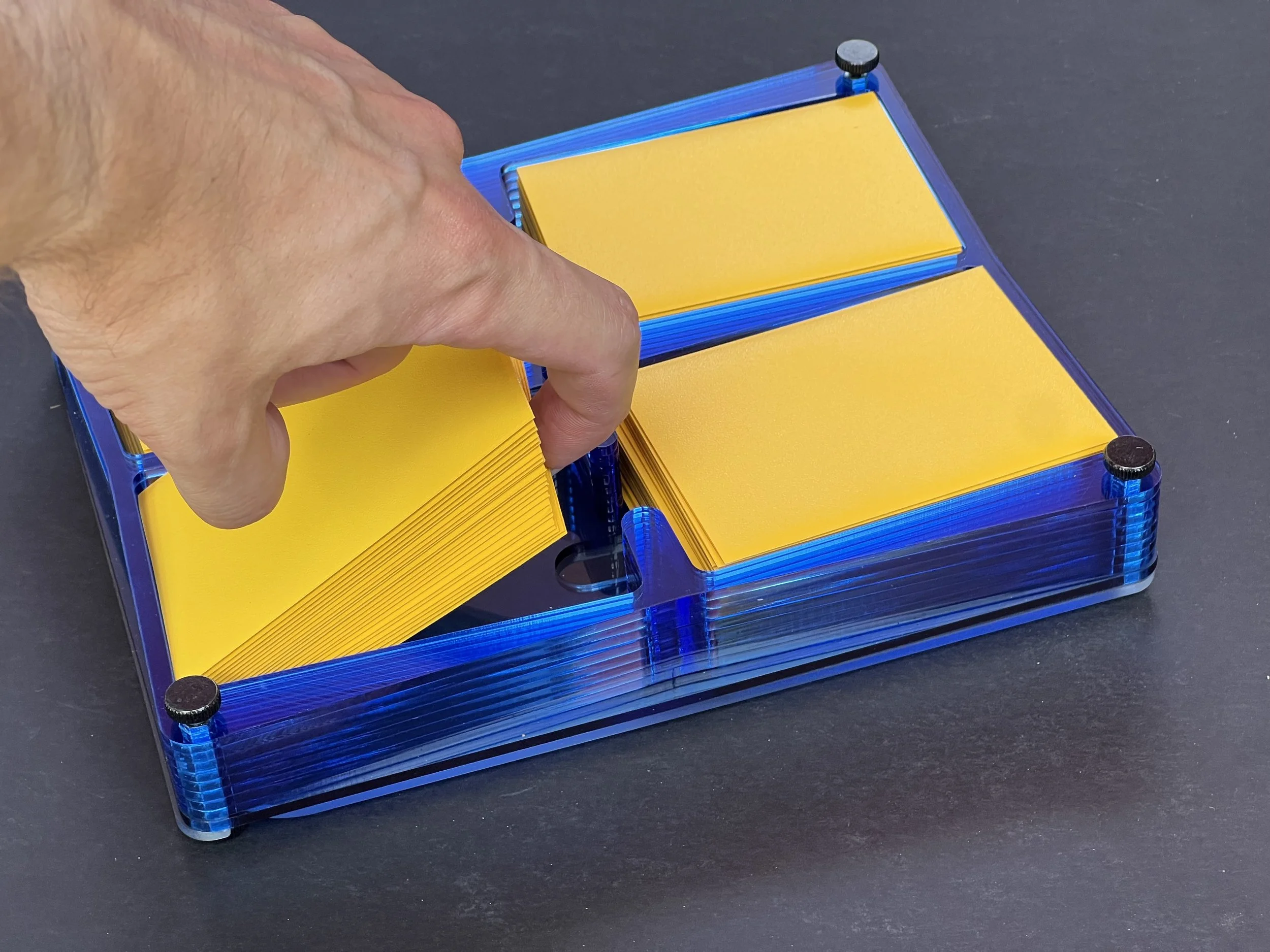
The final design integrated the lift into an entire layer rather than split across adapted off-cuts
Outcome
Stack started as one box, made to solve a problem I had at the table. Other players asking where to get one was the real signal - not a market study, but people wanting to buy the exact thing in front of them. That response led to a twenty-five unit run, sold direct online.
No tooling, no manufacturing partner, no inventory infrastructure - a much leaner setup than Studio Plural or Blushworks. It's a different kind of project: proof that the same design standards - material honesty, no compromise on finish or function - hold at any scale, from a single unit to a small batch.